Diversity Finder – The Platform for Lived Diversity

Migros Culture Percentage’s Diversity Finder introduces contacts for social and cultural issues with biographical expertise in diversity topics. Associations, organisations, companies and public institutions may use the platform to find experts who can support them with projects and diversity-sensitive processes. They use their perspective to shape content and processes more effectively. There are currently nearly 30 experts on the Diversity Finder.  

What can this tool do?

The platform makes it easier for interested parties in associations, organisations, companies and public institutions to access experience and expertise on diversity issues. They use their perspective to shape content and processes more effectively.  For example: an organisation wants to strengthen diverse teams. It wants to take the starting positions and needs of all people in these teams into account, and the opportunities of the team members should be fairly distributed. An expert from the Diversity Finder can then support the sensitisation and further process.

What does this tool contain?

Nearly 30 experts introduce themselves with a personal profile on the Diversity Finder. Profiles can be filtered by topic, language and region. The profiles describe the focal points and personal references to the topic. Once you have found the right person for your project or process, you can contact them directly.

Why is this tool needed?

Some people in our society are barely visible: we learn little about them in newspapers, on the internet or on television. This includes, for example, people with a history of migration, people with disabilities and people who do not identify with their assigned gender. The Diversity Finder makes different realities of life more visible through the experts.

Who is the target audience?

The Diversity Finder is aimed at interested parties in associations, organisations, companies and public institutions who want to take diverse perspectives into account. The experts can support projects and accompany diversity-sensitive processes.

Impressum

Ownership: Migros Culture Percentage 

contact: info-soziales@mgb.ch

Social Affairs and Societal Issues | Migros Commitment 


Published 13.3.26
Open art+care Zooms: Online format for discussion and thematic input (DE/EN/FR)

The Open art+care Zooms are an open, moderated online format for the personal exchange of experiences relating to artistic work and care responsibilities. They take place monthly and are open to all interested people without registration. The German- or English-language Open art+care Zoom takes place on the first Monday of each month, and the French-language Zoom on the first Wednesday of the month.

The dates are published on the art+care website in the agenda; the Zoom link is shared in advance via the Signal group and the art+care newsletter.

Important:
The Open art+care Zooms are not recorded and their content is not published.

The focus is on exchange, mutual support and the joint development of strategies for combining care responsibilities and artistic practice. The discussions in a small, protected setting are intended as an important contribution to necessary changes in the cultural sector.

What does this tool consist of?

  • Monthly, moderated Zoom discussion rounds (openly accessible via access link)
  • Publication of dates and access links via the Signal group or newsletter
  • Sometimes with brief thematic input at the beginning of the Zoom session
  • Duration: 1 to 1.5 hours

What can this tool do?

  • Exchange experiences and provide mutual relief (the feeling of not being alone)
  • Jointly develop strategies for combining artistic activity and care responsibilities
  • Build alliances and networks and strengthen the care discourse in art and culture

Why is this tool needed?

Many people in the arts and culture sector experience overload, guilt, pressure to justify themselves and the feeling of constantly lagging behind. The format creates a safe space to share these experiences and develop empowering alliances, solution strategies and energy for change.

Who is this tool for?

The format is open to anyone who is interested. It is aimed in particular at people in the arts and culture sector who have care responsibilities or are interested in care, solidarity-based practices and structural change in the cultural sector.

Concept & moderation:
art+care core team
contact@artandcare.org
artandcare.org

published 23.03.2026

Kleintheater Luzern: «All Inclusive»  – A Box for More

As people without a disability perspective, how can we contribute to making access to society and culture more inclusive? Kleintheater Luzern is working hard to find an answer. As a first step, the theatre’s co-management, inclusion officer and an inclusive working group have developed the «All Inclusive» toolbox. It supports individuals, groups and institutions from the spheres of culture, school and public administration on their path to greater inclusion. The toolbox helps jump-start efforts to break down barriers. Inclusion starts everywhere. «All Inclusive» is practical, light-hearted and result-focused.

Here is more information about the Kleintheater Luzern project «Inclusive cultural sector» and the documentary film «Alle inklusive – ein Kleintheater will mehr».

What does this tool consist of?

The physical toolbox consists of 3 parts.

  • No Taboo: a word game teaching inclusion terminology.
  • Workshop: a guide to help teams develop concrete measures.
  • Bits and Pieces: a website offering exercises, insights and important links on the topic of inclusion.


Who is this tool for?

«All Inclusive» is aimed at non-disabled individuals, groups and institutions from culture, schools or public administration.

Why is this tool needed?

«All Inclusive» poses key questions and invites us to answer them together:

  • What does inclusion mean in this context?
  • What knowledge is already available, what do we still need to learn?
  • What goals do we want to achieve and what challenges do we face in the process?
  • What motivates us to keep going and what support do we need?


What can this tool do?

«All Inclusive» makes people aware of barriers and empowers them to start breaking them down.

Tags

#inclusion
#culture
#inclusive
#society game
#workshop
#workshop
#theatre
#disability
#small theatreluzern
#barriers

Impressum

Kleintheater Luzern www.kleintheater.ch

Fabienne Mathis, Janine Bürkli

Publisher: Der gesunde Menschenversand GmbH, menschenversand.ch

«All Inclusive» was developed in collaboration with the Competence Centre for Diversity, Disability, and Inclusion (CCDI) at the University of St.Gallen amongst others. It has been tested by Theater Neumarkt Zurich, Theater Stadelhofen, the Lucerne Museums, Kunstmuseum Luzern and the ThiK Theater im Kornhaus Baden.

More Impact with Culture

In collaboration with Büro für Wagemut, m2act has created a short guide to help you gauge the potential impact of your project idea.

What does this tool consist of?

The tool consists of a two-page step-by-step guide with a case study and a template for individual use.


Tags

#Effect
#Overview
#Focus

What can this tool do?

This short guide has three aims:

  • Overview: It helps you summarise your project quickly and clearly. This can serve as a basis for presentations to partners, foundations, the public or other interested parties.
  • Focus on the essentials: It helps you to stay focused on your goal and distinguish the essentials from the non-essentials during the project.
  • More impact: It can help you recognise gaps, add points, adjust things and sharpen the project where necessary.


Who is this tool for?

More Impact with Culture is aimed, in particular, at people who have a project idea with which they want to contribute to a fairer, more inclusive and sustainable culture and society.

Why is this tool needed?

Projects aiming to bring about social change offer activities that are intended to trigger certain ways of thinking and acting which would not occur to the target group without the project. The impact of the project is measured in terms of this way of thinking and acting.

In order to design a project effectively, it helps to roll up the project from the back and to understand its impact chain more precisely.


Impressum


art+care Newsletter – Visibility of current topics and activities of the community

The art+care newsletter is a collaborative publication format that brings visibility to topics, actors, and activities within the community. It is published monthly and serves as a curatorial tool for the network, bringing together discourses on care, art, and solidarity practices and offering different perspectives. This format provides a publicly accessible platform for networks, projects, and resources.

Most of the content shared in the newsletter comes from the multilingual Signal groups of the art+care community, where all chat members can contribute.

The tool shows that a newsletter can be used not only as an information channel but also as a participatory knowledge archive. Such a newsletter can support communities in continuously promoting visibility, exchange, and networking.

What does this tool consist of?

Updates on art+care activities and current contributions from the entire community (called art+care Cosmos)

Why is this tool needed?

Strengthening the care discourse and interdisciplinary exchange in art and culture

What can this tool do?

Creating visibility and knowledge transfer

Who is this tool for?

A newsletter for anyone interested in contributions and formats related to the topic of art and care work

Concept & editing:
art+care core team

Content:
Contributions from members of the Signal groups (art+care Cosmos)

Contact:
contact@artandcare.org

Website:
artandcare.org

Newsletter registration

Signal Group (art+care Cosmos)

Published 05.03.2026

A:Practice

Action Matrix – Turning Cultural Institutions into Ecological Players

A:Practice enables a global perspective on the planet’s ecological situation and defines four fields of action that can help to restore balance.

The tool was developed in collaboration with The Forgotten Angle Theatre Collaborative (FATC), South Africa, and KlimaKontor Basel, Switzerland.

What does this tool comprise?

A:Practice is centred around its “matrix of action”. This matrix provides guidance; it facilitates immediate action and the simultaneous implementation of various sustainability concepts. It is compatible with other approaches to organisational development.

Why is this tool important?

We see that ecological crises continue to escalate while social upheaval is on the rise. At the same time, we see the great potential of cultural institutions to contribute to a society that thinks and acts ecologically. We meet people in charge of institutions who feel the need to move from knowledge to action.

Tags

#climatepositive
#solidarity
#south africa
#global perspective
#collaboration
#responsibility
#action
#transformation
#ecological narrative
#joy

What does this tool do?

The A:Practice Matrix of Action

  • supports the development of institutional ecological competences
  • empowers the organisation to take action in line with its specific location, resources and qualifications
  • facilitates immediate action across all levels of the organisation
  • invites all members of the organisation to contribute in line with their skills, motivation and personal interests
  • makes it possible to implement multiple measures simultaneously
  • reduces bureaucracy
  • promotes trans-institutional networking
  • provides a dramaturgical framework for ecological narratives

Who can use this tool?

A:Practice can be used by any individual, group, company, etc. Above all, it is intended for those who work in cultural institutions. It is also aimed at the people in charge of these institutions’ positioning and content: artistic directors, directors, management teams, authors, dramaturges, artists, curators, mediators, etc.

Impressum

The Forgotten Angle Theatre Collaborative (FATC), est. 1995

KlimaKontor Basel, est. 2020

Barbara Ellenberger (A:Practice Switzerland)
Matthias Michel (A:Practice Switzerland)
Peter John Sabbagha (A:Practice South Africa)

SPARK THE FLAME! – art+care Meet-up format to adopt

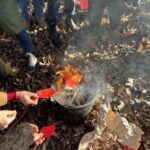
SPARK THE FLAME! is an adaptive event format by art+care that combines artistic practice and care work in an open, supportive setting. The focus is on lighting a fire together – as a collective action in physical space and as an experience of shared attention, care and community.

The format creates a accessible setting for exchange, resonance and collective presence. Participants and organisers are equally understood as actors; the act of being together becomes a collective artistic practice.

As a ready-to-use setting, SPARK THE FLAME! can be independently adapted and implemented by individuals, initiatives or institutions – from studio gardens to festivals, in a wide variety of contexts. It is not the size of the event that matters, but the quality of the encounter.

art+care provides the handout ‘How to SPARK THE FLAME!’ to anyone interested in hosting SPARK THE FLAME!

What does this tool consist of?

An adaptive, consciously simple event format with a clear, open structure: a fire (real or symbolic) forms the centrepiece, complemented by moderated exchange, optional artistic contributions and a host checklist for independent implementation. Simplicity is part of the concept.

What can this tool do?

  • Create community and spaces for resonance
  • Initiate new perspectives and collaborations
  • Make participation tangible as an artistic practice
  • Activate discourses on art and care
  • Enable inclusive, intergenerational encounters
  • People with care responsibilities

Why is this tool needed?

Care work in the arts and culture sector often remains invisible. At the same time, there is a lack of low-threshold, solidarity-based meeting places and corresponding structures.

The format focuses on bringing together people of all generations. Through joint action and being together, people who do not feel addressed by or are excluded from conventional art and culture formats due to their care situations also enter into relationships with each other.

SPARK THE FLAME! promotes participation: all those present become active contributors and are equally understood as actors in the event. Afterwards, they can explicitly identify their involvement as artistic participation (e.g. in their own artistic CV). The gathering itself becomes a collective artistic performance.

Who is this tool for?

  • Cultural creators with care responsibilities
  • Artists and cultural workers
  • Institutions, festivals, and initiatives
  • Communities that want to strengthen practices of solidarity
  • People of all generations who are interested in the topics of art and care

Published 05.03.2026

Artists Take Action

This guide supports cultural workers from all disciplines with questions about social security.

With this comprehensive knowledge database, Artists Take Action provides information on important topics such as retirement, family, stays abroad, accidents, and illnesses. It also explains which insurances are mandatory and which are optional. Regardless of how much you already know about social security, this guide—created by cultural workers for cultural workers—answers the most pressing questions.

Due to the legal content, the Artist Take Action guide is in German, French and Italian.

Who is this tool for?

Artists Take Action is aimed at all cultural workers who live and work in Switzerland.


What does this tool consist of?

Artists Take Action is the most comprehensive cross-disciplinary guide to social security in the cultural sector. It provides answers to specific questions about social insurance and forms of employment. For further inquiries, it facilitates contact with the respective professional association.

Why is this tool needed?

Many cultural workers receive little to no education about the basic principles of the labor market during their training. Artists Take Action helps to fill fundamental gaps regarding labor law, self-employment, social security, and insurance.

Impressum

Suisseculture Sociale

info@suisseculturesociale.ch

artists-take-action.ch

Disrupting Harm in Dance

This is an online self-directed course put together by Whistle in collaboration with multiple experts – Crip Movement Lab, The Dance Union, J Bouey, and OFEN Co-Arts – in the dance field. They offer information and tools for dancers, performers, and adjacent professionals to work together while feeling safe, connected, and empowered.

Whistle is an international platform founded by Frances Chiaverini and Robyn Doty in 2017 which aims to confront gender-based harm in dance workspaces along with other forms of discrimination and abuse. Their current offerings include resources and referrals that support a holistic support system for change-making in dance culture.

Who is this course for?

The course’s content is first and foremost for dancers.

Dancers, dance teachers, choreographers, directors, rehearsal directors and assistants, and any people working in dance administration and production might all benefit from elements of these resources.

Tags

#dance community
#faire practice
#make change
#empower
#speak up

What does this curriculum consist of?

This curriculum offers a wide range of tools, online courses, videos, talks, worksheets, workshop materials as well as all contacts of international expert contributors.

Crip Movement Lab

  • a critical methodology for practicing, teaching, and creating dance accessibly and inclusively

The Dance Union

  • Dismantling White Supremacy

J Bouey

  • Somatic Astrology for Dancers Guide

OFEN Co-Arts Platform

  • Embodying Anti-Capitalist Process
  • Levelling Hierarchy in Dance
  • Support and Universal Access
  • Speaking Up as an Act of Care

Whistle

  • Messy Talks: A Discussion Toolkit
  • Boundaries and Consent: A Worksheet
  • Working with Consent
  • When Considering Touch (for Teachers, Choreographers)
  • On publicly asking, “Who doesn’t pay?”
  • Practical Tips for Talking to a Journalist [About Your Abuse]
  • Signs of an Emotionally Abusive Choreographer
  • Providing (Self) Care
  • Writing an Impact Statement
  • When Considering Accountability
  • CARA’s Model of Accountability: A Worksheet

Why are these resources needed?

Dance culture is dysfunctional. It’s built on promoting and rewarding dance subordination and submission. It can strip dancers of their autonomy and intuition, and it can displace their own sense of value for narrow ideals of discipline, perfection, and virtuosity. There is a staggering lack of support at an institutional level for dancers experiencing abuse.

Download / Link

All resources are available in English.

disruptingdance.com

Download the Workbook as PDF

What can these resources do?

These resources can be used to help workers in institutions better support dance artists via believability, implementing private complaint processes, and building nutritive environments with wellbeing in mind.

Impressum

Whistle

disruptingdance.com

whistlewhileyouwork.art

Note: These resources are free of charge for individual dancers. If this course is being applied at an institutional level, a donation should be considered to Whistle and/or to the individual collaborators involved in the making of the course. Whistle strongly recommends finding the contributors online or in real life, checking out their respective catalogs of works – and booking and hiring them!

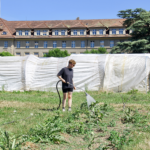
Perma-curatorial seeds: A series of workshops by the far° festival and factory of living arts 

The video «Planting perma-curatorial» – a series of workshops as part of the PERMA-CULTURE project – documents a participatory workshop where the principles of permaculture are experimentally applied to a cultural context, particularly to the performing arts. The experts in this field are: the far° Nyon team, Leila Chakroun, and Gregory Stauffer.

Drawing on collective intelligence and creativity, these multi-disciplinary workshops are designed to deploy in different contexts of the publication PERMA-CULTURE (work in progress). The first cycle of far° research aims to make the living arts «more alive». This series of workshops organised across Switzerland is an opportunity to exchange practices and theoretical knowledge and to learn from each other about concrete solutions.

What does this tool consist of?

This is a video tool. It offers an accessible approach to the PERMA-CULTURE concept presented by far° Nyon and its partners. It provides a visual and audio illustration of the work involved in pooling knowledge in order to share experiences within the performing arts. This tool is designed for all arts professionals.


Contact person

Anne-Christine Liske
liske@far-nyon.ch
+41 22 365 15 59

Impressum

A video by Matthieu Moerlen, Mr Jadis Production

With far° Nyon, Leila Chakroun and Gregory Stauffer

English subtitles by Alexandre Cracker

Supported by Migros Culture Percentage m2act, the City of Nyon, the Canton of Vaud and the Region of Nyon