Open art+care Zooms: Online format for discussion and thematic input (DE/EN/FR)

The Open art+care Zooms are an open, moderated online format for the personal exchange of experiences relating to artistic work and care responsibilities. They take place monthly and are open to all interested people without registration. The German- or English-language Open art+care Zoom takes place on the first Monday of each month, and the French-language Zoom on the first Wednesday of the month.

The dates are published on the art+care website in the agenda; the Zoom link is shared in advance via the Signal group and the art+care newsletter.

Important:
The Open art+care Zooms are not recorded and their content is not published.

The focus is on exchange, mutual support and the joint development of strategies for combining care responsibilities and artistic practice. The discussions in a small, protected setting are intended as an important contribution to necessary changes in the cultural sector.

What does this tool consist of?

  • Monthly, moderated Zoom discussion rounds (openly accessible via access link)
  • Publication of dates and access links via the Signal group or newsletter
  • Sometimes with brief thematic input at the beginning of the Zoom session
  • Duration: 1 to 1.5 hours

What can this tool do?

  • Exchange experiences and provide mutual relief (the feeling of not being alone)
  • Jointly develop strategies for combining artistic activity and care responsibilities
  • Build alliances and networks and strengthen the care discourse in art and culture

Why is this tool needed?

Many people in the arts and culture sector experience overload, guilt, pressure to justify themselves and the feeling of constantly lagging behind. The format creates a safe space to share these experiences and develop empowering alliances, solution strategies and energy for change.

Who is this tool for?

The format is open to anyone who is interested. It is aimed in particular at people in the arts and culture sector who have care responsibilities or are interested in care, solidarity-based practices and structural change in the cultural sector.

Concept & moderation:
art+care core team
contact@artandcare.org
artandcare.org

published 23.03.2026
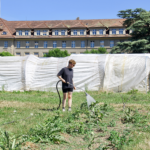
From thread to needle – building sustainable governance

This video follows the strategic retreat conducted by Costumières & Cie in 2025 with the support of Migros Culture Percentage m2act. It documents a key moment of collective reflection in which the board reviewed how the association operates and contemplated its values and future needs. This video provides a testimony of this crucial moment for the organisation and a way of sharing it with the public.

What does this tool consist of?

This tool is a documentary video showing what happened before and after the retreat in the words of those involved. It outlines the collective process that led to the drawing-up of Costumières & Cie’s charter and working conditions

What’s the purpose of this tool?

The processes of collective reflection, governance and organisational transformation are rarely captured. This video reveals how a brief but intensive period of time can have a profoundly transformative impact on a group if properly supported. It shows how – in a cohesive environment where people listen to each other – unexpected collective collaboration can be achieved – at both human and structural level.

What can this tool do?

The video allows its audience to share in a real-life experience of group work, inspires other associations or cultural groups and puts the tools produced by Costumières & Cie in context. It helps people understand the human, political and professional issues involved in the cultural sector.

Whom is this tool designed for?

This tool is aimed at Costumières & Cie members, cultural associations, institutions, partners, funding providers and anyone interested in issues related to collective governance, working conditions and structural organisation in the arts sector.

Additional toolbox by Costumières & Cie

Working conditions for the costume industry

Impressum

Film director: Erika Irmler
Costumières & Cie – video produced as part of the retreat in 2025 supported by the Migros Culture Percentage’s m2act

Contact: info@costumieres-et-cie.ch

www.costumieres-et-cie.ch


Published 19.03.2026

Documentary film on the transcontinental collaboration of GROUP50:50

In November 2023, the members of GROUP50:50 met in Berlin for a week to reflect on their collaboration and, in particular, on the process of creating the post-documentary musical theatre «The Ghosts are Returning». The group consists of artists from the Democratic Republic of the Congo, Switzerland and Germany. They thematise colonial crimes and neo-colonial mechanisms of exploitation in their work. Half of the positions are always filled by people from the DR Congo, the other half is made up of members from Germany or Switzerland.

What kind of tool is it?

The reflection process was documented in short interviews with the participants. These were edited into a ten-minute film that gives viewers an insight into the advantages and pitfalls of transcontinental cooperation. It also explores how the week of reflection unfolded. A central theme of the week of reflection was collaboration within an asymmetrical distribution of resources, which remains clearly apparent even when the group demographics (in this case, consisting of Congolese and European members) are balanced.

The short film, which consists of excerpts from the interviews, aims to encourage
other groups to address the entanglements between personal and structural conflicts that can occur in heterogeneous groups. Unravelling these misunderstandings, inequalities and injuries takes courage and time. By sharing their – sometimes very personal – insights, GROUP50:50 wishes to highlight that these negotiation processes are worth the effort.

Impressum

Authorship: GROUP50:50
Cinematography & editing: Franck Moka, Joseph Kasau,
Voiceover & surtitles: Luca Maier

GROUP50:50

Published 13.3.2026

A:Practice

Action Matrix – Turning Cultural Institutions into Ecological Players

A:Practice enables a global perspective on the planet’s ecological situation and defines four fields of action that can help to restore balance.

The tool was developed in collaboration with The Forgotten Angle Theatre Collaborative (FATC), South Africa, and KlimaKontor Basel, Switzerland.

What does this tool comprise?

A:Practice is centred around its “matrix of action”. This matrix provides guidance; it facilitates immediate action and the simultaneous implementation of various sustainability concepts. It is compatible with other approaches to organisational development.

Why is this tool important?

We see that ecological crises continue to escalate while social upheaval is on the rise. At the same time, we see the great potential of cultural institutions to contribute to a society that thinks and acts ecologically. We meet people in charge of institutions who feel the need to move from knowledge to action.

Tags

#climatepositive
#solidarity
#south africa
#global perspective
#collaboration
#responsibility
#action
#transformation
#ecological narrative
#joy

What does this tool do?

The A:Practice Matrix of Action

  • supports the development of institutional ecological competences
  • empowers the organisation to take action in line with its specific location, resources and qualifications
  • facilitates immediate action across all levels of the organisation
  • invites all members of the organisation to contribute in line with their skills, motivation and personal interests
  • makes it possible to implement multiple measures simultaneously
  • reduces bureaucracy
  • promotes trans-institutional networking
  • provides a dramaturgical framework for ecological narratives

Who can use this tool?

A:Practice can be used by any individual, group, company, etc. Above all, it is intended for those who work in cultural institutions. It is also aimed at the people in charge of these institutions’ positioning and content: artistic directors, directors, management teams, authors, dramaturges, artists, curators, mediators, etc.

Impressum

The Forgotten Angle Theatre Collaborative (FATC), est. 1995

KlimaKontor Basel, est. 2020

Barbara Ellenberger (A:Practice Switzerland)
Matthias Michel (A:Practice Switzerland)
Peter John Sabbagha (A:Practice South Africa)

produktionsDOCK: Guide – Producing in the Swiss independent performing art scene

This guide provides practical orientation for artists and production managers in the independent performing arts scene of German-speaking Switzerland. Step by step, it guides you through the central phases of an artistic project – from the initial idea to its concrete realisation, distribution and touring. The focus is on practical information and realistic insights into the typical process of a production as it is realised in collaboration with established event organisers in German-speaking Switzerland.

What does the tool consist of?

The content is based on the current work experiences of the production managers of produktionsDOCK, a Basel office of production managers (2017-2024), and reflects practice in 2024. This guide is intended as a snapshot that offers a comprehensive insight into the working methods of the Swiss independent performing art scene, without any general claim to completeness or binding force.

It is divided into three main chapters that accompany the phases of an artistic project in a structured and practical way: conception, production, diffusion/touring.

In addition, two detailed discussions provide in-depth insights into the topics of personnel and association administration, which are important for successful project work.

Tags

#productionmanagement
#projectadministration
#productioncycle
#management
#helpforself-help
#freescene
#performingarts
#freeproducing

Who is this tool aimed at?

The guide is aimed at anyone who is active in the independent scene in German-speaking Switzerland or would like to establish themselves there: young artists and production managers who are gaining their first experience but also experienced producers who are looking for inspiration or a useful tool for promoting young talent.

Impressum

Publisher: produktionsDOCK

Editors: Annina Birrer, Bernhard la Dous, Regula Schelling, Juliana Simonetti, Salomé Rodríguez Bär

Design: Céline Müller
Proofreading: Heike Dürscheid

The realisation of the guide was made possible by the generous support of m2act, the funding and network project of the Migros Culture Percentage for the performing arts, the Christoph Merian Foundation and the Ernst Göhner Foundation.


Perma-curatorial seeds: A series of workshops by the far° festival and factory of living arts 

The video «Planting perma-curatorial» – a series of workshops as part of the PERMA-CULTURE project – documents a participatory workshop where the principles of permaculture are experimentally applied to a cultural context, particularly to the performing arts. The experts in this field are: the far° Nyon team, Leila Chakroun, and Gregory Stauffer.

Drawing on collective intelligence and creativity, these multi-disciplinary workshops are designed to deploy in different contexts of the publication PERMA-CULTURE (work in progress). The first cycle of far° research aims to make the living arts «more alive». This series of workshops organised across Switzerland is an opportunity to exchange practices and theoretical knowledge and to learn from each other about concrete solutions.

What does this tool consist of?

This is a video tool. It offers an accessible approach to the PERMA-CULTURE concept presented by far° Nyon and its partners. It provides a visual and audio illustration of the work involved in pooling knowledge in order to share experiences within the performing arts. This tool is designed for all arts professionals.


Contact person

Anne-Christine Liske
liske@far-nyon.ch
+41 22 365 15 59

Impressum

A video by Matthieu Moerlen, Mr Jadis Production

With far° Nyon, Leila Chakroun and Gregory Stauffer

English subtitles by Alexandre Cracker

Supported by Migros Culture Percentage m2act, the City of Nyon, the Canton of Vaud and the Region of Nyon


Dampfzentrale Bern: Salary scheme for fair wages at cultural institutions in Switzerland

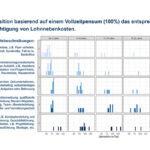
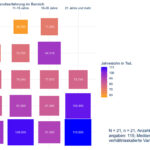
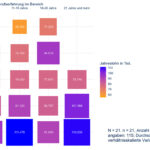
Dampfzentrale Bern commissioned the Centre for Cultural Management ZHAW to conduct the «Vorstudie Löhne Freie Kulturszene Schweiz» (Preliminary Study on Wages in the Independent Cultural Scene in Switzerland). Based on this, it has developed a scheme for fair standard wages for permanent employees at independent production houses in Switzerland.

This fair pay table is based on the Austrian model, «Fair Pay für Kulturarbeit». To date, no standardised guideline wages nor recommendations exist for employees in production, communication, management and technology at cultural institutions in Switzerland. The tpunkt professional association’s standard fees primarily affect freelancers.

ZHAW’s preliminary study provides an inventory of the current wage situation at independent production houses (focus: guest venues for dance and theatre). The results can also be transferred to cultural centres focusing on other genres.

A salary scheme was created on this basis, enabling cultural institutions to commit to transparent, fair wages. Every cultural institution’s core business is the presentation, discussion and communication of artistic creation. The salary scheme is based on the idea that commercial and artistic professions should be given equal weighting at similar levels of responsibility. 

The study was conducted in German, therefore all documents are in German.

Why is this tool necessary?

The salaries of permanent employees at Swiss cultural institutions are well below average when compared with similar positions in other sectors. This exacerbates the shortage of skilled personnel, weakens social sustainability and negatively impacts the qualitative consistency of work performed at institutions. To date, there are no standardised guideline wages and recommendations for employees in production, communication, management and technology at cultural institutions in Switzerland. The standard fees of the professional association tpunkt and the endeavours as part of the 2025–2028 cultural message primarily concern freelancers.

What this tool do?

The new salary scheme offers an easy-to-use, transferable, transparent modular system for application to all positions in a cultural institution.

Who is this tool for?

Cultural institutions in Switzerland that want to commit to fair, transparent salaries.

Focus: guest venues for dance and/or theatre


What does this tool consist of?

Its central element is a modular system that can be used for all positions in a cultural institution.  The basis for this was provided by the results of ZHAW’s preliminary study.

Information on wages in the cultural organisations (all values)

Information on wages in the cultural organisations (median)

Information on wages in the cultural organisations (average)

Impressum

Dampfzentrale Bern

Karin Bitterli (Commercial Director Dampfzentrale Bern), bitterli@dampfzentrale.chThe

Talking Diversity

In its communications, the Schauspielhaus Zürich takes care to use language that is sensitive towards and critical of all discrimination. Schauspielhaus employees and ensemble members have compiled a glossary of basic terms to make sure that the audience knows what certain words mean.

What does this tool comprise?

This glossary is a collection of terms with explanations. The terms presented here are explicitly not definitions. They are not set in stone for all eternity.

Some come from the US-American language region and have not yet found a German equivalent. The terms are often dependent on the local social contexts in which they are used, and their meanings shift in use.

They provide a temporary snapshot of our time, as we all know how quickly social conditions can change.

Tags

#glossary
#diversity
#inclusivelanguage #schauspielhaus.ch
#talkingdiversity

What can this glossary contribute to?

This glossary raises awareness of non-discriminatory language.

Non-discriminatory language helps us to differentiate while counteracting stereotyping and violent ascriptions of others.

It allows all individuals to speak for themselves and in their own words, embracing their personal affiliations.

Who is this tool for?

This glossary is for everyone. The terms are intended to encourage us to see language not as a constraint but a creative tool that enables us to help shape the world actively and autonomously.

Why is this glossary important?

Language is a fluid tool. It reflects social processes; sometimes, it can even drive change. By making yourself aware of discrimination and altering your speech accordingly, you can help

  • overcome centuries-old systems of power and violence that affect society as a whole,
  • avoid belittling vulnerable people and
  • give greater visibility to marginalised groups.

Marginalised people are underrepresented not only linguistically but also in the media, politics and culture, and their voices struggle to find a platform and attention.

Download

The glossary is available in German and English:

Impressum

Text references:
The texts in this glossary are taken from various sources, which we would like to name and thank: Diversity Arts Culture, diversity-arts-culture.berlin; Diversum – Verein für rassismuskritisches Denken, www.verein-diversum.ch and the glossary in Evein Obulor & Rosamag (eds.): Schwarz wird großgeschrieben, 2021. Some of the texts are original contributions to this publication.

Redaction:
Fadrina Arpagaus, Yuvviki Dioh, Miriam Ibrahim, Laura Kaufmann, Laiya Sievi

Published by: Schauspielhaus Zürich AG Zeltweg 5, 8032 Zurich

FIT FOR THE FUTURE: 2025 Annual Report

This Annual Report provides an overview of the first year of FIT FOR THE FUTURE, a three-year project created as part of the FIT Festival. The report covers a process of observation, learning and transformation related to transitions in artistic leadership, outlining often undocumented dynamics, such as relationships, fragilities, responsibility and tacit knowledge. The report also includes a provisional set of principles for transitions in artistic leadership based on experience gained during the first year, providing a tool kit for reflection and guidance. The report does not set out conclusive results, but a work-in-progress pathway towards creating a sustainable and replicable transition model in the performing arts sector.

It reports on the first of three years. Another report will be produced for the year 2026. A third report, scheduled for the end of 2027, will present the entire process as a model project and will be available in all languages.

What does this tool consist of?

It reports on a process documenting the first year of a transition in artistic leadership, outlining reflections, practices and operational principles.

What can this tool do?

It provides guidance, language and key tools to support more gradual and sustainable transitions based on greater awareness.

Who is this tool for?

Artistic directors, cultural teams and institutions facing or considering a change of leadership.

Why is this tool necessary?

To highlight and share what is usually informal and undocumented knowledge, the lack of which often results in traumatic transitions.


Impressum

Paola Tripoli and Simon Waldvogel

produzione@fitfestival.ch

www.fitfestival.ch

Tatenbank

The Swiss-wide central action platform for a more sustainable cultural sphere

The Tatenbank is a project by Vert le Futur, the association for sustainable culture and events.  The platform gathers knowledge from the cultural sector on sustainably producing and organising cultural events. The content of the Tatenbank is researched and curated by an interdisciplinary team of people at the intersection of culture and sustainability, with creative artists, authors, software developers, communication specialists, graphic designers and networking artists continuously building up and further developing it.

What is the Tatenbank made up of?

The Tatenbank offers condensed knowledge checked by experts, specific aids and tools and inspiring examples of sustainable work in all areas of cultural creation:

  • Administration
  • Equipment
  • Purchasing
  • Gastronomy
  • Infrastructure
  • Communication
  • Curation
  • Artistic content

Tags

#tatenbank
#vertlefutur
#tools
#inspiration
#ideas
#examples
#sustainableculture

What does the Tatenbank offer?

  • Information: The Tatenbank is a source of knowledge, inspiration and orientation.
  • Community: Creative artists can use the Tatenbank to obtain low-threshold access to expertise and a network of experts. They can learn how to go about their activities in a resource-conserving, sustainable way.
  • Participation: Users can get involved and share their own «deeds» in the area of sustainable cultural creation. The Tatenbank is therefore continuously updated with experiences from the community.

Why is the Tatenbank important?

To ensure that sustainability does not get swept under the table in the world of culture, it is important to have useful aids, knowledge and in particular good examples at our disposal.

It takes time to collect and study this information, and to draw the right conclusions from it.

The Vert le Futur association aims to close this gap with the Tatenbank.

Who is the Tatenbank aimed at?

The Tatenbank is aimed at creative artists from all genres who want to work towards sustainable culture in their respective areas of work and impact.

All content is available in German and French.

Impressum

Vert le Futur
vertlefutur.ch

Contact details
tatenbank@vertlefutur.ch