Migros Pioneer Fund: From 0 to 100

The Migros Pioneer Fund‘s «From 0 to 100» toolbox helps you turn a good idea into an effective pioneering project. Social innovation rarely happens in a straight line: it requires guidance, reflection and the right tools at the right time. The toolbox combines practical instructions, tried-and-tested methods and helpful templates to guide you through your project. It helps you gain clarity, structure challenges and tackle the next steps in a targeted manner. Whether you are at the beginning, in the middle or at a turning point, the toolbox is your reliable companion.

What does this tool consist of?

The «From 0 to 100» toolbox consists of two central elements:
a guide for pioneering projects and a collection of tools, methods and templates. The content is modular in structure and can be used flexibly depending on the project phase, from the initial spark of an idea to further development or scaling.


Tags

#migrospionierfonds
#pionierprojekt
#von0auf100

What can this tool do?

The toolbox helps you refine your idea, make informed decisions and consciously shape the course of your project. It offers concrete support on topics such as collaboration, impact, role clarification, communication and reflection. The content is practical, tried and tested, and designed to empower you to take action.

Who is this tool for?

The «From 0 to 100» toolbox is aimed at project teams, initiatives and individuals who want to create social added value with their ideas. It is particularly suitable for pioneering projects in the early and middle stages.

Why is this tool necessary?

Social change is complex and fraught with uncertainty. Projects encounter questions, conflicting goals and obstacles along the way. The toolbox provides guidance, makes implicit knowledge accessible and helps to tackle challenges in a structured manner without losing sight of the individual character of a project.


Impressum

Authorship:
Migros Pioneer Fund

Concept & production:
Migros Pioneer Fund

Contact:
Migros Pioneer Fund


This work is licensed under a Creative Commons Attribution – NonCommercial – 4.0 International License.
Dampfzentrale Bern: Salary scheme for fair wages at cultural institutions in Switzerland

Dampfzentrale Bern commissioned the Centre for Cultural Management ZHAW to conduct the «Vorstudie Löhne Freie Kulturszene Schweiz» (Preliminary Study on Wages in the Independent Cultural Scene in Switzerland). Based on this, it has developed a scheme for fair standard wages for permanent employees at independent production houses in Switzerland.

This fair pay table is based on the Austrian model, «Fair Pay für Kulturarbeit». To date, no standardised guideline wages nor recommendations exist for employees in production, communication, management and technology at cultural institutions in Switzerland. The tpunkt professional association’s standard fees primarily affect freelancers.

ZHAW’s preliminary study provides an inventory of the current wage situation at independent production houses (focus: guest venues for dance and theatre). The results can also be transferred to cultural centres focusing on other genres.

A salary scheme was created on this basis, enabling cultural institutions to commit to transparent, fair wages. Every cultural institution’s core business is the presentation, discussion and communication of artistic creation. The salary scheme is based on the idea that commercial and artistic professions should be given equal weighting at similar levels of responsibility. 

The study was conducted in German, therefore all documents are in German.

Why is this tool necessary?

The salaries of permanent employees at Swiss cultural institutions are well below average when compared with similar positions in other sectors. This exacerbates the shortage of skilled personnel, weakens social sustainability and negatively impacts the qualitative consistency of work performed at institutions. To date, there are no standardised guideline wages and recommendations for employees in production, communication, management and technology at cultural institutions in Switzerland. The standard fees of the professional association tpunkt and the endeavours as part of the 2025–2028 cultural message primarily concern freelancers.

What this tool do?

The new salary scheme offers an easy-to-use, transferable, transparent modular system for application to all positions in a cultural institution.

Who is this tool for?

Cultural institutions in Switzerland that want to commit to fair, transparent salaries.

Focus: guest venues for dance and/or theatre


What does this tool consist of?

Its central element is a modular system that can be used for all positions in a cultural institution.  The basis for this was provided by the results of ZHAW’s preliminary study.

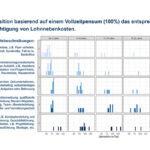
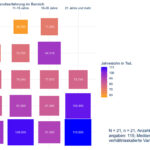
Information on wages in the cultural organisations (all values)

Information on wages in the cultural organisations (median)

Information on wages in the cultural organisations (average)

Impressum

Dampfzentrale Bern

Karin Bitterli (Commercial Director Dampfzentrale Bern), bitterli@dampfzentrale.chThe

Values of Solidarity

A mediation game for team-building and cultural co-creation

«Values of Solidarity» is a workshop tool that is both a game and a mediation tool for teams that are just beginning their collaboration. Using cards, participants can describe which values are important to them and learn which values drive their partners. This enables members of a project or work group to get to know one another better and share values, experiences and needs that would perhaps otherwise not be shared. The discussions that arise during the game promote collaborative communication and create a framework for supporting and lasting collaboration that reflects the participants’ cultural, intellectual and emotional diversity.

What does this tool offer?

«Values of Solidarity» is a set of cards in English. The game contains two types of cards:

«Value» cards contain descriptions of values that may be important for creating a framework of solidarity and collaboration:

  • Honesty
  • Motivation
  • Respect
  • Health
  • etc.

«Conflict» cards contain fictional scenarios to be overcome in which poor communication and cultural differences lead to tension and conflict.

Tags

#community
#care
#values
#solidarity
#collaboration
#fairpractice
#nonviolentcommunication
#reshapenetwork
#valuesofsolidarity

Why is this set of cards important?

Conflicts may arise in work groups and collaborative relationships when members have very different values or some people do not recognise others’ rights.

During the game, teams are presented with fictional conflict situations and team members have the chance to formulate their own values.

The aim is for each team to formulate their own value frameworks. This promotes solidarity within the group.

Who is this tool aimed at?

The tool has been developed especially for teams that are just beginning their collaboration. In particular, it is aimed at project teams working in the areas of art and culture, but is also relevant for other sectors.

What can be achieved with this set of cards?

«Values of Solidarity» offers inspiration and the opportunity to reflect on how a team wants to overcome possible conflicts.

The game places participants in conflict situations together. This enables them to identify the often hidden and obscure mechanisms causing tension and difficulties. At the same time, participants can identify the methods needed to relieve tensions, especially when different backgrounds merge.

This game has the potential to raise awareness of solidarity and the practical and operational framework it offers for collaboration.

Download

More information can be found on the Reshape Network website:

The Gamified Workshop Toolkit: Values of Solidarity

Download extract

Ordering a set of cards

The set of cards can be ordered from RESO – Dance Network Switzerland for CHF 15 plus delivery costs.

Send an email to RESO if interested: info@reso.ch

Impressum

2020, RESHAPE Network

reshape.network

Created by Anikó Rácz, Doreen Toutikian and Dorota Ogrodzka in consultation with Konrad Gadzina.

Developed as part of RESHAPE project «Solidarische Ökonomien» («Solidarity-based economies»), involving Ouafa Belgacem, Ekmel Ertan, Harald Geisler, Anastasya Kizilova, Dorota Ogrodzka, Anikó Rácz, Laure de Selys and Doreen Toutikian under the management of Nike Jonah.

The new edition of «Values of Solidarity» in 2022 was financed by Reso – Dance Network Switzerland and m2act, the funding and network project of the Migros Culture Percentage.

Biography.art: Questions About the Ethical Handling of Personal Stories

Biografie.art questions, examines and illuminates artistic collaborations that incorporate documentary and biographical material; it thematises hierarchies and explores ethical obligations in artistic projects. What are the reasons for working biographically and how? What guidelines apply when dealing with third-party stories? How do I create an appreciative and ethically responsible approach to the stories I share? And how do I deal with eyewitnesses, victims or actors? Relationship work in documentary and biographical work is the main focus.

What does this tool include?

The website offers reports on findings and experiences, questions approaches and encourages ethical reflection and action. Artistic projects are organised by phase. This provides an opportunity to reflect on one’s own artistic perspective through the experiences of other artists, story sharers and assessments from trauma therapy, investigative journalism and social anthropology. A working document is also freely available, which can be used to agree on a common work approach and ethical guidelines with all project participants. If you would like to delve even deeper, you can contact the Biografie.art team for workshops, coaching or discussion formats or similar.

The working document will initially be available for download in German starting in June 2025.

Tags

#ethical questions
#ethics
#fair-practice
#guidelines
#self-questioning #biography #biography-art
#documentary-theatre #documentary-film #trust #exchange-of-experiences #relationship work

For whom is this tool?

For all those who work (auto)biographically and who share their own or others’ stories as part of an artistic project. The project survey tool offers illustrative examples and space for self-exploration and strategic questioning for both project managers and project participants. It also lends itself to relationship work in documentary projects in the performing arts, such as documentary film.

Why is this tool needed?

To give all project participants trust, security, agreement and a feeling of appreciation. Personal stories, in particular, want to be in good hands. People want to feel accurately represented, and anyone working with such material is happy to have binding guidelines and ethical credentials that give all involved employees ethically responsible room for manoeuvre.

Impressum

Ownership:

Dennis Schwabenland, director and actor, and Katja Zellweger, cultural journalist and Germanist, are behind Biografie.art. Dramaturgical advice from director and playwright Anna Papst, production management by Ramun Bernetta.

Contact:

Info@biografie.art

Website


PERMA-CULTURE, for more sustainable performing arts

Since 2022, the far° Nyon team has been conducting collective research to make its operations and, more generally, the performing arts more sustainable. To do this, it relies on the principles of permaculture (a conceptual toolbox based on an ethic of care, derived from the contraction of “agriculture” and “permanent”). 

In 2023, at the end of the first stage of this research, we published PERMA-CULTURE (work in progress). This short essay has been designed as a forum for discussion. It can be used both as an archive of our experiments and as a series of suggestions (exercises, references, reflections) that could perhaps inspire you.

The publication is available in French and English as a Fanzine (order from far° Nyon). A bilingual version (English/French), to be read on screen or printed out in A4 format is online available.

What does the tool consist of?

The tool takes the form of a small publication. It includes:

  • feedback,
  • theoretical resources,
  • practical examples.

The publication is intended to be a source of inspiration. In 2024-2025, the far° team and its partners will offer a series of workshops linked to the project and the publication.


Tags

#sustainability
#toolbox
#inspiring change
#simple, concrete examples
#quality of life at work
#accessibility

What can this tool do?

In PERMA-CULTURE, the far° Nyon team is not trying to pass on a miracle recipe. But it does offer a number of practical and theoretical tools that have enabled it to drive real change, on both a small and large scale.


Who is this tool aimed at?

This publication can provide food for thought and practice for anyone seeking to change the way they work, with the aim of becoming more sustainable – ecologically, humanly, socially and artistically.


Why is this tool needed?

In the face of climate disruption, we urgently need to rethink the way we operate to make the performing arts, and cultural environments in general, more sustainable. To meet such a challenge, permaculture offers a simple, accessible model that can be applied to any situation.

Impressum

Ownership:

far° Nyon, mit Leila Chakroun, Clément Demaurex und Gregory Stauffer

Contact:

participation@far-nyon.ch
Website

Photo: Workshop at the far° festival of performing arts

©Arya Dil, far° Nyon 2024

Green Guide for cultural organisations

reflector supports cultural organisations and creative artists in reducing their ecological footprint and shaping a forward-looking, vibrant cultural scene.

With the Green Guide for cultural organisations , reflector provides instructions for the rapid implementation of ecological measures.

reflector is supported by m2act, Migros Culture Percentage’s funding and networking project for the performing arts, in collaboration with the Migros Pioneer Fund.

What does this tool offer?

The Green Guide consists of several sets of thematic guidelines with specific measures designed to facilitate action that can be implemented swiftly. All of the guidelines can be used independently from the others and in any order.

Tags

#reflector
#greenguide
#howto
#sustainability
#sustainabletheatre
#greenculture

What does this tool do?

The Green Guide provides suggestions for effective and sensible measures in the following areas:

  • Mobility
  • Production
  • Technology
  • Food
  • Energy
  • Communication

Within each guideline there are several suggested measures that can be selected individually. This results in a customised action plan that can be downloaded as a PDF.

Why is this tool important?

Integrating sustainability into day-to-day operations is not always easy. The Green Guide makes it easier to get started, helps to set goals and implement the appropriate measures.

Who is this tool aimed at?

The Green Guide accompanies cultural institutions and creative artists on the way to sustainable practices. The guidelines were developed together with cultural organisations and sustainability experts.

Impressum

Contact

hello@reflector.eco
reflector.eco
Instagram
LinkedIn

Impact Guide

Der Impact Guide ist eine Schritt-für-Schritt Anleitung, die Projektteams dabei unterstützt, ihr Projekt möglichst wirkungsvoll aufzusetzen.

Er hilft Akteur*innen, die in den Darstellenden Künsten zu einem Strukturwandel beitragen wollen, ihre Annahmen zu überprüfen und herauszufinden, ob die geplanten Aktivitäten und Angebote bei der Zielgruppe tatsächlich die gewünschte Verhaltensänderung bewirken.

Der Impact Guide basiert auf der Theory of Change und wurde vom Migros-Pionierfonds gemeinsam mit Policy Analytics entwickelt.

Warum braucht es dieses Tool?

Projekte, die einen gesellschaftlichen Wandel anstreben, bieten Aktivitäten an, die beim Zielpublikum eine Verhaltensänderung auslösen sollen, die ohne das Projektangebot nicht stattfinden würde. Die Wirkung des Projekts misst sich an dieser Verhaltensänderung.

Für die wirkungsvolle Konzipierung eines Projekts hilft es, das Projekt von hinten aufzurollen und seine Wirkungskette genauer zu kennen.

Dafür stellt der Impact Guide folgende Fragen:

  • Welche systemische Veränderung streben wir an?
  • Wer muss sein Verhalten wie ändern, um dieser systemischen Veränderung näher zu kommen?
  • Welches Angebot kann unser Projekt machen, um zu dieser Verhaltensänderung beizutragen?
  • Welche Annahmen stecken hinter dem Zusammenhang zwischen Angebot und Verhaltensänderung – und sind diese plausibel?

Tags

#impact
#wirkungsorientierung
#theory of change
#systemische veränderung
#input output outcome
#wirkungskette

Für wen ist dieses Tool?

Der Impact Guide ist ein Angebot für alle Akteur*innen, die mit ihren Ideen, Aktivitäten und Projekten eine fairere, inklusivere und nachhaltigere Kultur und Gesellschaft gestalten wollen.

Was kann dieses Tool?

Ein Projektteam kann mit Hilfe des Impact Guide Schritt für Schritt seine eigene Wirkungslogik aufzeichnen, seine Annahmen prüfen und die Aktivitäten so ausrichten, dass sie tatsächlich zum Erreichen der Wirkungsziele beitragen.

Er hilft dabei

  • Wirkungsziele zu definieren
  • Zusammenhänge zu visualisieren
  • Wirkungsketten zu erkennen
  • Annahmen zu überprüfen
  • Angebote zu schärfen

Impressum

Autor*innen: Linda Sulzer, Aljosha Henkel, Andreas Beerli

Migros Pionierfonds / Direktion Kultur und Soziales des Migros-Genossenschafts-Bundes

Policy Analytics


Stand: November 2021

Supporting Relevance

Ideas and strategies for inclusive, fair and flexible arts funding 

IETM – The international network for contemporary performing arts is one of the oldest and largest international cultural networks, representing the voice of over 500 organisations and individual professionals working in the contemporary performing arts worldwide. 

The network is actively working towards the achievement of better working conditions in the arts. Securing arts funding is a key element of this urgent and complex process. IETM campaigns intensively for new forms of arts funding. The publication «Supporting Relevance: Ideas and strategies for inclusive, fair and flexible arts funding» wants to encourage debate and offers strategies and solutions for sustainably improving the situation in the arts sector and the conditions for the professionals involved. 

What does this tool offer? 

In this publication, IETM provides: 

  • Key terms  
  • Inspiring examples 
  • Arguments 
  • Recommendations 

All of these are aimed at promoting fair, flexible and inclusive funding in the performing arts. 

Tags

#fairfunding
#inclusivefunding
#flexiblefunding
#sustainableart
#fairpractices 

Why is this tool important? 

The aim is for the arts sector to thrive and remain relevant in line with its values and current developments in society. Rethinking, adapting and improving models, methods and instruments related to arts funding is therefore essential. 

What does this tool do? 

The publication answers the following questions: 

  • Fairness: What is the key to fair funding in the performing arts?  
  • Flexibility: What does flexible funding mean? 
  • Inclusion: Who is excluded and how does inclusion work? 

The publication makes an important contribution to the current discussions surrounding the future of the performing arts and the role of arts funding in this sector. 

Who is this tool aimed at? 

The publication is aimed at all stakeholders looking to contribute ideas, activities and projects that will help shape a fairer, more inclusive and more sustainable culture and society, particularly at members of funding institutions and selection committees.

Download PDF

IETM Publication 2021 – Supporting Relevance

The publication is also available as an audio document on the IETM’s website: www.ietm.org  

Impressum

M. Ilic, F. Farhat, «Supporting relevance: Ideas and strategies for inclusive, fair and flexible arts funding», IETM, November 2021.

www.ietm.org/en/resources

g3 method

(shaping society together!)

Inspired by design thinking, this innovation method enables cultural practitioners to develop concrete and practical solutions to current challenges (such as participation and fair working conditions) in the performing arts. Six concrete guidelines have been developed:

Six guidelines

  • How can we work well with each other?
  • How can we learn more about other people’s specific needs?
  • How can we make good use of the insights we have gained?
  • How can we develop new ideas together?
  • How can we make an idea tangible?
  • How can we test our idea before we put it into action?

TAGS

#collaboration
#design thinking
#participation
#create space
#discuss

What can gachieve ?

The g3 method proposes a specific and immediate way to approach accessibility and participation. It is:

  • Free of charge because it does not require any form of professional moderation.
  • Ideal for encouraging groups of different types of people in heterogeneous groups of any size to participate.
  • Low threshold and simple to use, so it is easy to get started straight away without any introduction or special training.
  • Efficient because each workshop produces concrete results in just one hour.
  • Needs-orientated and can be used as a whole and individually in a wide range of combinations.
  • Practical as it focuses on key topics such as needs analyses, idea development and the designing and testing of prototypes.

Who is  aimed at?

The g3 method is offered to anyone who is involved with cultural institutions or projects, and people who would like to find concrete answers to concrete questions.

The process guidelines are also ideal for other topic areas such as politics, administration and civil society.

It is important that the g3 method should never be understood as a finished product. It should instead be seen as a way of giving people the opportunity to work constructively and collaboratively.

Why is the gmethod needed?

Complex challenges within culture and politics can no longer be satisfactorily managed by individuals or interest groups. The wide spectrum of needs is not only continually growing, but traditional forms of decision making are also increasingly being challenged.

Ways of reaching and involving the whole population more intensively and effectively in discussions relating to content are being discussed in depth in the arts and culture sector. Teams set up in a wide variety of ways are more creative, more effective and can therefore work more successfully.

About us

KIWit-Programme «Kultur+Wirtschaft»
Project lead: Moritz von Rappard, Co-development: Hanna Voss, Collaboration: Stefanie Neumeister

This work is licensed under a creative commons designation – non-commercial – under the same conditions as the 4.0 international licence.

Inclusion

The method is not completely inclusive yet because a lack of language skills and physical and mental disabilities make full participation more difficult. However, in the best-case scenario, each application in practice may open up further ideas or perspectives, which is why we especially welcome feedback.

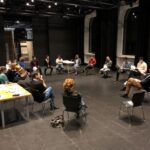
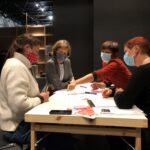
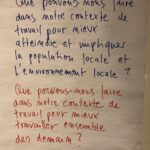
A look back at the g3 workshop m2act@legrütli

m2act@LeGrütli
m2act@LeGrütli
m2act@LeGrütli
m2act@LeGrütli

Les bonnes pratiques

A self-assessment tool and concrete ways of promoting sustainability in the performing arts

Les Bonnes Pratiques is a joint pilot project of the Association des Compagnies Vaudoises and the Syndicat Suisse Romand du Spectacle. This initiative is primarily aimed at project managers in the performing arts. Through a non-binding self-assessment process, Les Bonnes Pratiques raises awareness of the issues surrounding working conditions and sustainability within professional practice in the cultural sector.

What does the tool consist of?

The tool is provided in the form of an internet platform. It consists of:

  • a guide
  • resources
  • a self-assessment tool

It can be used partially or fully, depending on the user’s wishes.

Tags

#lesbonnespratiquesch
#selfevaluation
#health in the workplace #sustainable art

What can this tool do?

By taking the time to scrutinise your project with the help of Les Bonnes Pratiques, you can identify possible weaknesses and act accordingly in a well-founded and persuasive manner. This is the first step towards significant improvements in the process of setting up and implementing projects.

Why is this tool needed?

In addition to the ecological aspects that all cultural professionals urgently need to consider when designing their projects, it also addresses issues surrounding the working environment. These are especially important, as the situation for employees in the independent cultural sector gradually deteriorates.

Who is this tool aimed at?

Les Bonnes Pratiques is primarily aimed at project managers in the performing arts. However, the concrete opportunities highlighted by the tool can inspire anyone who wishes to incorporate sustainability into their working practices.