Diversity Finder – The Platform for Lived Diversity

Migros Culture Percentage’s Diversity Finder introduces contacts for social and cultural issues with biographical expertise in diversity topics. Associations, organisations, companies and public institutions may use the platform to find experts who can support them with projects and diversity-sensitive processes. They use their perspective to shape content and processes more effectively. There are currently nearly 30 experts on the Diversity Finder.  

What can this tool do?

The platform makes it easier for interested parties in associations, organisations, companies and public institutions to access experience and expertise on diversity issues. They use their perspective to shape content and processes more effectively.  For example: an organisation wants to strengthen diverse teams. It wants to take the starting positions and needs of all people in these teams into account, and the opportunities of the team members should be fairly distributed. An expert from the Diversity Finder can then support the sensitisation and further process.

What does this tool contain?

Nearly 30 experts introduce themselves with a personal profile on the Diversity Finder. Profiles can be filtered by topic, language and region. The profiles describe the focal points and personal references to the topic. Once you have found the right person for your project or process, you can contact them directly.

Why is this tool needed?

Some people in our society are barely visible: we learn little about them in newspapers, on the internet or on television. This includes, for example, people with a history of migration, people with disabilities and people who do not identify with their assigned gender. The Diversity Finder makes different realities of life more visible through the experts.

Who is the target audience?

The Diversity Finder is aimed at interested parties in associations, organisations, companies and public institutions who want to take diverse perspectives into account. The experts can support projects and accompany diversity-sensitive processes.

Impressum

Ownership: Migros Culture Percentage 

contact: info-soziales@mgb.ch

Social Affairs and Societal Issues | Migros Commitment 


Published 13.3.26
Open art+care Zooms: Online format for discussion and thematic input (DE/EN/FR)

The Open art+care Zooms are an open, moderated online format for the personal exchange of experiences relating to artistic work and care responsibilities. They take place monthly and are open to all interested people without registration. The German- or English-language Open art+care Zoom takes place on the first Monday of each month, and the French-language Zoom on the first Wednesday of the month.

The dates are published on the art+care website in the agenda; the Zoom link is shared in advance via the Signal group and the art+care newsletter.

Important:
The Open art+care Zooms are not recorded and their content is not published.

The focus is on exchange, mutual support and the joint development of strategies for combining care responsibilities and artistic practice. The discussions in a small, protected setting are intended as an important contribution to necessary changes in the cultural sector.

What does this tool consist of?

  • Monthly, moderated Zoom discussion rounds (openly accessible via access link)
  • Publication of dates and access links via the Signal group or newsletter
  • Sometimes with brief thematic input at the beginning of the Zoom session
  • Duration: 1 to 1.5 hours

What can this tool do?

  • Exchange experiences and provide mutual relief (the feeling of not being alone)
  • Jointly develop strategies for combining artistic activity and care responsibilities
  • Build alliances and networks and strengthen the care discourse in art and culture

Why is this tool needed?

Many people in the arts and culture sector experience overload, guilt, pressure to justify themselves and the feeling of constantly lagging behind. The format creates a safe space to share these experiences and develop empowering alliances, solution strategies and energy for change.

Who is this tool for?

The format is open to anyone who is interested. It is aimed in particular at people in the arts and culture sector who have care responsibilities or are interested in care, solidarity-based practices and structural change in the cultural sector.

Concept & moderation:
art+care core team
contact@artandcare.org
artandcare.org

published 23.03.2026

art+care Newsletter – Visibility of current topics and activities of the community

The art+care newsletter is a collaborative publication format that brings visibility to topics, actors, and activities within the community. It is published monthly and serves as a curatorial tool for the network, bringing together discourses on care, art, and solidarity practices and offering different perspectives. This format provides a publicly accessible platform for networks, projects, and resources.

Most of the content shared in the newsletter comes from the multilingual Signal groups of the art+care community, where all chat members can contribute.

The tool shows that a newsletter can be used not only as an information channel but also as a participatory knowledge archive. Such a newsletter can support communities in continuously promoting visibility, exchange, and networking.

What does this tool consist of?

Updates on art+care activities and current contributions from the entire community (called art+care Cosmos)

Why is this tool needed?

Strengthening the care discourse and interdisciplinary exchange in art and culture

What can this tool do?

Creating visibility and knowledge transfer

Who is this tool for?

A newsletter for anyone interested in contributions and formats related to the topic of art and care work

Concept & editing:
art+care core team

Content:
Contributions from members of the Signal groups (art+care Cosmos)

Contact:
contact@artandcare.org

Website:
artandcare.org

Newsletter registration

Signal Group (art+care Cosmos)

Published 05.03.2026

A:Practice

Action Matrix – Turning Cultural Institutions into Ecological Players

A:Practice enables a global perspective on the planet’s ecological situation and defines four fields of action that can help to restore balance.

The tool was developed in collaboration with The Forgotten Angle Theatre Collaborative (FATC), South Africa, and KlimaKontor Basel, Switzerland.

What does this tool comprise?

A:Practice is centred around its “matrix of action”. This matrix provides guidance; it facilitates immediate action and the simultaneous implementation of various sustainability concepts. It is compatible with other approaches to organisational development.

Why is this tool important?

We see that ecological crises continue to escalate while social upheaval is on the rise. At the same time, we see the great potential of cultural institutions to contribute to a society that thinks and acts ecologically. We meet people in charge of institutions who feel the need to move from knowledge to action.

Tags

#climatepositive
#solidarity
#south africa
#global perspective
#collaboration
#responsibility
#action
#transformation
#ecological narrative
#joy

What does this tool do?

The A:Practice Matrix of Action

  • supports the development of institutional ecological competences
  • empowers the organisation to take action in line with its specific location, resources and qualifications
  • facilitates immediate action across all levels of the organisation
  • invites all members of the organisation to contribute in line with their skills, motivation and personal interests
  • makes it possible to implement multiple measures simultaneously
  • reduces bureaucracy
  • promotes trans-institutional networking
  • provides a dramaturgical framework for ecological narratives

Who can use this tool?

A:Practice can be used by any individual, group, company, etc. Above all, it is intended for those who work in cultural institutions. It is also aimed at the people in charge of these institutions’ positioning and content: artistic directors, directors, management teams, authors, dramaturges, artists, curators, mediators, etc.

Impressum

The Forgotten Angle Theatre Collaborative (FATC), est. 1995

KlimaKontor Basel, est. 2020

Barbara Ellenberger (A:Practice Switzerland)
Matthias Michel (A:Practice Switzerland)
Peter John Sabbagha (A:Practice South Africa)

Artists Take Action

This guide supports cultural workers from all disciplines with questions about social security.

With this comprehensive knowledge database, Artists Take Action provides information on important topics such as retirement, family, stays abroad, accidents, and illnesses. It also explains which insurances are mandatory and which are optional. Regardless of how much you already know about social security, this guide—created by cultural workers for cultural workers—answers the most pressing questions.

Due to the legal content, the Artist Take Action guide is in German, French and Italian.

Who is this tool for?

Artists Take Action is aimed at all cultural workers who live and work in Switzerland.


What does this tool consist of?

Artists Take Action is the most comprehensive cross-disciplinary guide to social security in the cultural sector. It provides answers to specific questions about social insurance and forms of employment. For further inquiries, it facilitates contact with the respective professional association.

Why is this tool needed?

Many cultural workers receive little to no education about the basic principles of the labor market during their training. Artists Take Action helps to fill fundamental gaps regarding labor law, self-employment, social security, and insurance.

Impressum

Suisseculture Sociale

info@suisseculturesociale.ch

artists-take-action.ch

FemaleAct Calculator

FemaleAct is an association of FINTA actors who live and work in Switzerland (FINTA stands for Women (Frauen), Intersex, Non-binary, Trans and Agender individuals). They use their professional experience to identify where structural change is needed in the performing arts and develop projects to accelerate it.

FemaleAct has developed the online tool «Kalkulator» over the last two years. It has been integrated in the FemaleAct website since December 2023. In 2024, the tool will be further developed in collaboration with the first users.

What does this tool comprise?

On the FemaleAct website, performing artists can quickly and easily calculate care costs outside regular working hours (7:00am-6:00pm).

The first version of the calculator focuses on childcare.

Tags

#care
#costs
#fair wages
#fair practice
#contracts

What does this tool do?

The calculator works out the childcare costs you will have to bear during rehearsals over and above the institutional options. The result can be downloaded as a PDF.

So you can:

  • enter into wage negotiations
  • contribute to a fair wage structure
  • raise awareness of work-life balance

Who is this tool for?

The FemaleAct calculator is available free of charge to both artists and employers.

Why is this tool important?

In performing arts projects (theatre, performance, film, etc.), work is often done outside regular working and institutional childcare hours. Artists therefore often incur additional childcare costs, which they have to bear privately.

The calculator helps to make these costs visible, enabling the additional care work to be adequately factored into cultural project budgets.

Impressum

FemaleAct association: femaleact.ch

Facebook

Instagram

Illustration: Rachel Duc

Migros Pioneer Fund: From 0 to 100

The Migros Pioneer Fund‘s «From 0 to 100» toolbox helps you turn a good idea into an effective pioneering project. Social innovation rarely happens in a straight line: it requires guidance, reflection and the right tools at the right time. The toolbox combines practical instructions, tried-and-tested methods and helpful templates to guide you through your project. It helps you gain clarity, structure challenges and tackle the next steps in a targeted manner. Whether you are at the beginning, in the middle or at a turning point, the toolbox is your reliable companion.

What does this tool consist of?

The «From 0 to 100» toolbox consists of two central elements:
a guide for pioneering projects and a collection of tools, methods and templates. The content is modular in structure and can be used flexibly depending on the project phase, from the initial spark of an idea to further development or scaling.


Tags

#migrospionierfonds
#pionierprojekt
#von0auf100

What can this tool do?

The toolbox helps you refine your idea, make informed decisions and consciously shape the course of your project. It offers concrete support on topics such as collaboration, impact, role clarification, communication and reflection. The content is practical, tried and tested, and designed to empower you to take action.

Who is this tool for?

The «From 0 to 100» toolbox is aimed at project teams, initiatives and individuals who want to create social added value with their ideas. It is particularly suitable for pioneering projects in the early and middle stages.

Why is this tool necessary?

Social change is complex and fraught with uncertainty. Projects encounter questions, conflicting goals and obstacles along the way. The toolbox provides guidance, makes implicit knowledge accessible and helps to tackle challenges in a structured manner without losing sight of the individual character of a project.


Impressum

Authorship:
Migros Pioneer Fund

Concept & production:
Migros Pioneer Fund

Contact:
Migros Pioneer Fund


This work is licensed under a Creative Commons Attribution – NonCommercial – 4.0 International License.

Dampfzentrale Bern: Salary scheme for fair wages at cultural institutions in Switzerland

Dampfzentrale Bern commissioned the Centre for Cultural Management ZHAW to conduct the «Vorstudie Löhne Freie Kulturszene Schweiz» (Preliminary Study on Wages in the Independent Cultural Scene in Switzerland). Based on this, it has developed a scheme for fair standard wages for permanent employees at independent production houses in Switzerland.

This fair pay table is based on the Austrian model, «Fair Pay für Kulturarbeit». To date, no standardised guideline wages nor recommendations exist for employees in production, communication, management and technology at cultural institutions in Switzerland. The tpunkt professional association’s standard fees primarily affect freelancers.

ZHAW’s preliminary study provides an inventory of the current wage situation at independent production houses (focus: guest venues for dance and theatre). The results can also be transferred to cultural centres focusing on other genres.

A salary scheme was created on this basis, enabling cultural institutions to commit to transparent, fair wages. Every cultural institution’s core business is the presentation, discussion and communication of artistic creation. The salary scheme is based on the idea that commercial and artistic professions should be given equal weighting at similar levels of responsibility. 

The study was conducted in German, therefore all documents are in German.

Why is this tool necessary?

The salaries of permanent employees at Swiss cultural institutions are well below average when compared with similar positions in other sectors. This exacerbates the shortage of skilled personnel, weakens social sustainability and negatively impacts the qualitative consistency of work performed at institutions. To date, there are no standardised guideline wages and recommendations for employees in production, communication, management and technology at cultural institutions in Switzerland. The standard fees of the professional association tpunkt and the endeavours as part of the 2025–2028 cultural message primarily concern freelancers.

What this tool do?

The new salary scheme offers an easy-to-use, transferable, transparent modular system for application to all positions in a cultural institution.

Who is this tool for?

Cultural institutions in Switzerland that want to commit to fair, transparent salaries.

Focus: guest venues for dance and/or theatre


What does this tool consist of?

Its central element is a modular system that can be used for all positions in a cultural institution.  The basis for this was provided by the results of ZHAW’s preliminary study.

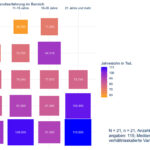
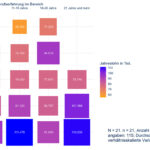
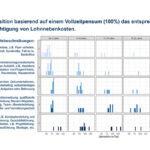
Information on wages in the cultural organisations (all values)

Information on wages in the cultural organisations (median)

Information on wages in the cultural organisations (average)

Impressum

Dampfzentrale Bern

Karin Bitterli (Commercial Director Dampfzentrale Bern), bitterli@dampfzentrale.chThe

Talking Diversity

In its communications, the Schauspielhaus Zürich takes care to use language that is sensitive towards and critical of all discrimination. Schauspielhaus employees and ensemble members have compiled a glossary of basic terms to make sure that the audience knows what certain words mean.

What does this tool comprise?

This glossary is a collection of terms with explanations. The terms presented here are explicitly not definitions. They are not set in stone for all eternity.

Some come from the US-American language region and have not yet found a German equivalent. The terms are often dependent on the local social contexts in which they are used, and their meanings shift in use.

They provide a temporary snapshot of our time, as we all know how quickly social conditions can change.

Tags

#glossary
#diversity
#inclusivelanguage #schauspielhaus.ch
#talkingdiversity

What can this glossary contribute to?

This glossary raises awareness of non-discriminatory language.

Non-discriminatory language helps us to differentiate while counteracting stereotyping and violent ascriptions of others.

It allows all individuals to speak for themselves and in their own words, embracing their personal affiliations.

Who is this tool for?

This glossary is for everyone. The terms are intended to encourage us to see language not as a constraint but a creative tool that enables us to help shape the world actively and autonomously.

Why is this glossary important?

Language is a fluid tool. It reflects social processes; sometimes, it can even drive change. By making yourself aware of discrimination and altering your speech accordingly, you can help

  • overcome centuries-old systems of power and violence that affect society as a whole,
  • avoid belittling vulnerable people and
  • give greater visibility to marginalised groups.

Marginalised people are underrepresented not only linguistically but also in the media, politics and culture, and their voices struggle to find a platform and attention.

Download

The glossary is available in German and English:

Impressum

Text references:
The texts in this glossary are taken from various sources, which we would like to name and thank: Diversity Arts Culture, diversity-arts-culture.berlin; Diversum – Verein für rassismuskritisches Denken, www.verein-diversum.ch and the glossary in Evein Obulor & Rosamag (eds.): Schwarz wird großgeschrieben, 2021. Some of the texts are original contributions to this publication.

Redaction:
Fadrina Arpagaus, Yuvviki Dioh, Miriam Ibrahim, Laura Kaufmann, Laiya Sievi

Published by: Schauspielhaus Zürich AG Zeltweg 5, 8032 Zurich

t. Standard wages and fees

Professional and industry association t. Theaterschaffen Schweiz provides as a wage and fee guide for professionals in the independent performing arts. This allows you to calculate appropriate earnings for your work and conduct transparent and comprehensible salary or fee negotiations.

t. Theaterschaffen Schweiz set up a working group for the further development of standard wages and fees. They began their work at the end of 2021. In a broad consultation process, a wide range of actors in the sector from all parts of the country were involved in tool development and in determining benchmarks.

In the process of further developing standard wages and fees, t. Theaterschaffen Schweiz encourages professionals on stage and behind the scenes, as well as interest groups, to engage more actively in the discussions on wages and fees. There is still too little talk about money, both in the independent performing arts and in culture. The t. Standard wages and fees create more transparency and aim to promote a culture of negotiation.

What does this tool offer?

At www.tpunkt.ch/richtloehne there are two newly created tools available that are tailored to the special working realities in the independent performing arts:

Tags

#negotiation
#fairwages
#money
#budget
#fairpractice
#contracts

What does this tool do?

With the t. Calculator, freelancers and self-employed persons can calculate their salary or fee for the development and rehearsal phase. New gradations such as work experience, the level of responsibility in the project and the work region are included.

The t. Budget can be used to calculate the recommended price of a performance and the amortization costs per performance.

Why is this tool important?

Professionals in the independent theatre scene, cabaret and other branches of the independent performing arts have a right to fair remuneration based on their training and professionalism.

t. offers the first national calculation tool for more transparency and negotiation culture in the entire sector.

Who is this tool for?

It serves as a guide for individual artists, theatre groups, agencies, event organisers, theatres and private and public funding bodies.

Contact

t. Theaterschaffen Schweiz
www.tpunkt.ch

info@tpunkt.ch

Impressum

Working group t. Standard wages and fees

  • Cristina Galbiati, Co-President of t. Theaterschaffen Schweiz.
  • Eric Devanthéry, Management Board member of t. Theaterschaffen Schweiz.
  • Nina Mariel Kohler, Management Board member of t. Theaterschaffen Schweiz.
  • Christophe Drag, Administrative Manager Cie Philippe Saire
  • Gabi Bernetta, Producer, Bernetta Theaterproduktionen, winner of the Swiss Theatre Award 2018
  • Anja Lauper, Agent Kunstprojekte.ch / Tourbo-music.ch
  • Judith Rohrbach, former Co-Director Kleintheater Lucerne / Since October 2023, Head of Swiss Artists’ Exchange and Deputy Head t. Theaterschaffen Schweiz).

Project management office t.

  • Chantal Hirschi, Managing Director t. Theaterschaffen Schweiz).
  • Clara Gudehus, Head of Services and Projects

Supported by m2act /Migros Culture Percentage, Swisslos Kultur Kanton Bern, Schweizerische Interpretenstiftung, Federal Office of Culture