t. Standard wages and fees

Professional and industry association t. Theaterschaffen Schweiz provides as a wage and fee guide for professionals in the independent performing arts. This allows you to calculate appropriate earnings for your work and conduct transparent and comprehensible salary or fee negotiations.

t. Theaterschaffen Schweiz set up a working group for the further development of standard wages and fees. They began their work at the end of 2021. In a broad consultation process, a wide range of actors in the sector from all parts of the country were involved in tool development and in determining benchmarks.

In the process of further developing standard wages and fees, t. Theaterschaffen Schweiz encourages professionals on stage and behind the scenes, as well as interest groups, to engage more actively in the discussions on wages and fees. There is still too little talk about money, both in the independent performing arts and in culture. The t. Standard wages and fees create more transparency and aim to promote a culture of negotiation.

What does this tool offer?

At www.tpunkt.ch/richtloehne there are two newly created tools available that are tailored to the special working realities in the independent performing arts:

Tags

#negotiation
#fairwages
#money
#budget
#fairpractice
#contracts

What does this tool do?

With the t. Calculator, freelancers and self-employed persons can calculate their salary or fee for the development and rehearsal phase. New gradations such as work experience, the level of responsibility in the project and the work region are included.

The t. Budget can be used to calculate the recommended price of a performance and the amortization costs per performance.

Why is this tool important?

Professionals in the independent theatre scene, cabaret and other branches of the independent performing arts have a right to fair remuneration based on their training and professionalism.

t. offers the first national calculation tool for more transparency and negotiation culture in the entire sector.

Who is this tool for?

It serves as a guide for individual artists, theatre groups, agencies, event organisers, theatres and private and public funding bodies.

Contact

t. Theaterschaffen Schweiz
www.tpunkt.ch

info@tpunkt.ch

Impressum

Working group t. Standard wages and fees

  • Cristina Galbiati, Co-President of t. Theaterschaffen Schweiz.
  • Eric Devanthéry, Management Board member of t. Theaterschaffen Schweiz.
  • Nina Mariel Kohler, Management Board member of t. Theaterschaffen Schweiz.
  • Christophe Drag, Administrative Manager Cie Philippe Saire
  • Gabi Bernetta, Producer, Bernetta Theaterproduktionen, winner of the Swiss Theatre Award 2018
  • Anja Lauper, Agent Kunstprojekte.ch / Tourbo-music.ch
  • Judith Rohrbach, former Co-Director Kleintheater Lucerne / Since October 2023, Head of Swiss Artists’ Exchange and Deputy Head t. Theaterschaffen Schweiz).

Project management office t.

  • Chantal Hirschi, Managing Director t. Theaterschaffen Schweiz).
  • Clara Gudehus, Head of Services and Projects

Supported by m2act /Migros Culture Percentage, Swisslos Kultur Kanton Bern, Schweizerische Interpretenstiftung, Federal Office of Culture

Tatenbank

The Swiss-wide central action platform for a more sustainable cultural sphere

The Tatenbank is a project by Vert le Futur, the association for sustainable culture and events.  The platform gathers knowledge from the cultural sector on sustainably producing and organising cultural events. The content of the Tatenbank is researched and curated by an interdisciplinary team of people at the intersection of culture and sustainability, with creative artists, authors, software developers, communication specialists, graphic designers and networking artists continuously building up and further developing it.

What is the Tatenbank made up of?

The Tatenbank offers condensed knowledge checked by experts, specific aids and tools and inspiring examples of sustainable work in all areas of cultural creation:

  • Administration
  • Equipment
  • Purchasing
  • Gastronomy
  • Infrastructure
  • Communication
  • Curation
  • Artistic content

Tags

#tatenbank
#vertlefutur
#tools
#inspiration
#ideas
#examples
#sustainableculture

What does the Tatenbank offer?

  • Information: The Tatenbank is a source of knowledge, inspiration and orientation.
  • Community: Creative artists can use the Tatenbank to obtain low-threshold access to expertise and a network of experts. They can learn how to go about their activities in a resource-conserving, sustainable way.
  • Participation: Users can get involved and share their own «deeds» in the area of sustainable cultural creation. The Tatenbank is therefore continuously updated with experiences from the community.

Why is the Tatenbank important?

To ensure that sustainability does not get swept under the table in the world of culture, it is important to have useful aids, knowledge and in particular good examples at our disposal.

It takes time to collect and study this information, and to draw the right conclusions from it.

The Vert le Futur association aims to close this gap with the Tatenbank.

Who is the Tatenbank aimed at?

The Tatenbank is aimed at creative artists from all genres who want to work towards sustainable culture in their respective areas of work and impact.

All content is available in German and French.

Impressum

Vert le Futur
vertlefutur.ch

Contact details
tatenbank@vertlefutur.ch

Sustainable Impact Tool

The Sustainable Impact Tool is a free working tool for cultural institutions and projects in Switzerland. It supports general and creative artists in systematically analysing their activities with regard to ecological and social sustainability. The effectiveness of sustainable action can thus be tested both at the institutional level and for individual productions, tours or events. The tool is refined on an ongoing basis.

What does this tool consist of?

The Sustainable Impact Tool enables the simplification of sustainability reporting through a variety of digital modules. Sub-elements enable the clear calculation of the CO2 footprint and further reporting modules for various areas of social sustainability are continually added.


Tags

#responsibility
#action
#sustainability
#reporting

What can this tool do?

The Sustainable Impact Tool supports an easily accessible and systematic analysis of the activities of general and creative artists with regard to environmental and social sustainability.

Who is this tool for?

The Sustainable Impact Tool is available free of charge for use by all cultural institutions, events, productions and tours in Switzerland. 

Why is this tool needed?

Simple reporting enables the prioritisation of measures based on their effectiveness for sustainable development. This makes it possible to monitor impact and deploy resources where they can have the greatest effect.


Impressum

The tool was launched by Pro Helvetia and the Migros Culture Percentage.

Values of Solidarity

A mediation game for team-building and cultural co-creation

«Values of Solidarity» is a workshop tool that is both a game and a mediation tool for teams that are just beginning their collaboration. Using cards, participants can describe which values are important to them and learn which values drive their partners. This enables members of a project or work group to get to know one another better and share values, experiences and needs that would perhaps otherwise not be shared. The discussions that arise during the game promote collaborative communication and create a framework for supporting and lasting collaboration that reflects the participants’ cultural, intellectual and emotional diversity.

What does this tool offer?

«Values of Solidarity» is a set of cards in English. The game contains two types of cards:

«Value» cards contain descriptions of values that may be important for creating a framework of solidarity and collaboration:

  • Honesty
  • Motivation
  • Respect
  • Health
  • etc.

«Conflict» cards contain fictional scenarios to be overcome in which poor communication and cultural differences lead to tension and conflict.

Tags

#community
#care
#values
#solidarity
#collaboration
#fairpractice
#nonviolentcommunication
#reshapenetwork
#valuesofsolidarity

Why is this set of cards important?

Conflicts may arise in work groups and collaborative relationships when members have very different values or some people do not recognise others’ rights.

During the game, teams are presented with fictional conflict situations and team members have the chance to formulate their own values.

The aim is for each team to formulate their own value frameworks. This promotes solidarity within the group.

Who is this tool aimed at?

The tool has been developed especially for teams that are just beginning their collaboration. In particular, it is aimed at project teams working in the areas of art and culture, but is also relevant for other sectors.

What can be achieved with this set of cards?

«Values of Solidarity» offers inspiration and the opportunity to reflect on how a team wants to overcome possible conflicts.

The game places participants in conflict situations together. This enables them to identify the often hidden and obscure mechanisms causing tension and difficulties. At the same time, participants can identify the methods needed to relieve tensions, especially when different backgrounds merge.

This game has the potential to raise awareness of solidarity and the practical and operational framework it offers for collaboration.

Download

More information can be found on the Reshape Network website:

The Gamified Workshop Toolkit: Values of Solidarity

Download extract

Ordering a set of cards

The set of cards can be ordered from RESO – Dance Network Switzerland for CHF 15 plus delivery costs.

Send an email to RESO if interested: info@reso.ch

Impressum

2020, RESHAPE Network

reshape.network

Created by Anikó Rácz, Doreen Toutikian and Dorota Ogrodzka in consultation with Konrad Gadzina.

Developed as part of RESHAPE project «Solidarische Ökonomien» («Solidarity-based economies»), involving Ouafa Belgacem, Ekmel Ertan, Harald Geisler, Anastasya Kizilova, Dorota Ogrodzka, Anikó Rácz, Laure de Selys and Doreen Toutikian under the management of Nike Jonah.

The new edition of «Values of Solidarity» in 2022 was financed by Reso – Dance Network Switzerland and m2act, the funding and network project of the Migros Culture Percentage.

Biography.art: Questions About the Ethical Handling of Personal Stories

Biografie.art questions, examines and illuminates artistic collaborations that incorporate documentary and biographical material; it thematises hierarchies and explores ethical obligations in artistic projects. What are the reasons for working biographically and how? What guidelines apply when dealing with third-party stories? How do I create an appreciative and ethically responsible approach to the stories I share? And how do I deal with eyewitnesses, victims or actors? Relationship work in documentary and biographical work is the main focus.

What does this tool include?

The website offers reports on findings and experiences, questions approaches and encourages ethical reflection and action. Artistic projects are organised by phase. This provides an opportunity to reflect on one’s own artistic perspective through the experiences of other artists, story sharers and assessments from trauma therapy, investigative journalism and social anthropology. A working document is also freely available, which can be used to agree on a common work approach and ethical guidelines with all project participants. If you would like to delve even deeper, you can contact the Biografie.art team for workshops, coaching or discussion formats or similar.

The working document will initially be available for download in German starting in June 2025.

Tags

#ethical questions
#ethics
#fair-practice
#guidelines
#self-questioning #biography #biography-art
#documentary-theatre #documentary-film #trust #exchange-of-experiences #relationship work

For whom is this tool?

For all those who work (auto)biographically and who share their own or others’ stories as part of an artistic project. The project survey tool offers illustrative examples and space for self-exploration and strategic questioning for both project managers and project participants. It also lends itself to relationship work in documentary projects in the performing arts, such as documentary film.

Why is this tool needed?

To give all project participants trust, security, agreement and a feeling of appreciation. Personal stories, in particular, want to be in good hands. People want to feel accurately represented, and anyone working with such material is happy to have binding guidelines and ethical credentials that give all involved employees ethically responsible room for manoeuvre.

Impressum

Ownership:

Dennis Schwabenland, director and actor, and Katja Zellweger, cultural journalist and Germanist, are behind Biografie.art. Dramaturgical advice from director and playwright Anna Papst, production management by Ramun Bernetta.

Contact:

Info@biografie.art

Website


PERMA-CULTURE, for more sustainable performing arts

Since 2022, the far° Nyon team has been conducting collective research to make its operations and, more generally, the performing arts more sustainable. To do this, it relies on the principles of permaculture (a conceptual toolbox based on an ethic of care, derived from the contraction of “agriculture” and “permanent”). 

In 2023, at the end of the first stage of this research, we published PERMA-CULTURE (work in progress). This short essay has been designed as a forum for discussion. It can be used both as an archive of our experiments and as a series of suggestions (exercises, references, reflections) that could perhaps inspire you.

The publication is available in French and English as a Fanzine (order from far° Nyon). A bilingual version (English/French), to be read on screen or printed out in A4 format is online available.

What does the tool consist of?

The tool takes the form of a small publication. It includes:

  • feedback,
  • theoretical resources,
  • practical examples.

The publication is intended to be a source of inspiration. In 2024-2025, the far° team and its partners will offer a series of workshops linked to the project and the publication.


Tags

#sustainability
#toolbox
#inspiring change
#simple, concrete examples
#quality of life at work
#accessibility

What can this tool do?

In PERMA-CULTURE, the far° Nyon team is not trying to pass on a miracle recipe. But it does offer a number of practical and theoretical tools that have enabled it to drive real change, on both a small and large scale.


Who is this tool aimed at?

This publication can provide food for thought and practice for anyone seeking to change the way they work, with the aim of becoming more sustainable – ecologically, humanly, socially and artistically.


Why is this tool needed?

In the face of climate disruption, we urgently need to rethink the way we operate to make the performing arts, and cultural environments in general, more sustainable. To meet such a challenge, permaculture offers a simple, accessible model that can be applied to any situation.

Impressum

Ownership:

far° Nyon, mit Leila Chakroun, Clément Demaurex und Gregory Stauffer

Contact:

participation@far-nyon.ch
Website

Photo: Workshop at the far° festival of performing arts

©Arya Dil, far° Nyon 2024

m2act × Burning Issues: towards a just, diverse & inclusive culture – Position paper

Artistic management teams are under fire, demands for social sustainability are getting louder and louder, and balancing family life and cultural work remains a major challenge. The Swiss theatre scene is on the move. From 15 to 17 September 2023, the «M2ACT × BURNING ISSUES – Performing Arts & Action» network meeting brought more than 400 cultural professionals from all over Switzerland, Germany, Austria and Italy together for three days. They jointly developed a position paper containing urgent demands for change in order to make working conditions in the performing arts more sustainable, fairer and more appealing.

What does the tool consist of?

The position paper formulates goals for a fairer, more equitable and more diverse world of work in the performing arts and details the framework in which these goals were formulated. It also lists the authors and first signatories. The position paper constitutes a list of jointly voiced demands, which must be positioned in the day-to-day work of the performing arts.

Tags

#responsibility
#action
#sustainability
#reporting
#collaboration
#fair practice
#contracts

What can this Tool do?

The position paper was published as a petition on the ACT CAMPAX platform within the scope of m2act x Burning Issues. Supporters can sign it here (509 signatures as at 30 April 2024). The phrasing of the demands can be copied, improved and used as a tool to drive change in your own organisations and institutions or in politics.

Who is this tool for?

The position paper is meant for all cultural professionals and people from other sectors who are campaigning for fairer, more diverse and inclusive conditions in their workplace.


Why is this tool needed?

Viele Menschen, die in den Darstellenden Künsten arbeiten, sind unzufrieden mit den Arbeits- und Produktionsbedingungen und mit der momentanen Verteilung von Geld, Zeit und Einfluss. Sie wollen sich vernetzen, gemeinsam Gehör verschaffen und gegenseitig unterstützen.

Impressum

From 15 to 17 September 2023, the M2ACT × BURNING ISSUES – Performing Arts & Action network meeting brought more than 400 cultural professionals from all over Switzerland, Germany, Austria and Italy together for three days. They jointly developed a position paper containing urgent demands for change in order to make working conditions in the performing arts more sustainable, fairer and more appealing.


«Alle inklusive – ein Kleintheater will mehr»

This documentary takes you on the journey of Kleintheater Luzern towards a more inclusive cultural offering. Not only did Kleintheater Luzern record the inclusive programme that took place at their venue and how they implemented it, but they also took the 23/24 season as an opportunity to ask other cultural institutions, cultural funding bodies and politicians about inclusion in the cultural sector and the performing arts.

What does the tool consist of?

This tool consists of a 60-minute documentary film. The film is available with subtitles in DE/FR, as well as with subtitles for the hearing impaired in DE/FR and an audio description audio track.


Tags

#inclusion
#performingarts
#theatre
#cabaret#disability
#kleintheaterluzern
#barriers


What can this tool do?

This film provides a brief factual insight into the development, opportunities and future challenges of inclusion in the field of culture.

The film gives a voice to a wide variety of stakeholders, listens and puts into context where the topic of inclusion currently stands in the Swiss cultural scene.

The complete film can be requested from Kleintheater Luzern for a small licence fee.


Who is this tool aimed at?

For all those who (would like to) deal with the topic of inclusion in the cultural sector and the performing arts.


Why is this tool needed?

The topic of inclusion in the cultural sector is broken down in a vivid and entertaining way and made accessible through the chosen medium of film.

Impressum

Ownership: Fabienne Mathis on behalf of Kleintheater Luzern

The tool may be published under the following CC licence:

This work is licensed under a Creative Commons Attribution – Non-Commercial – Share alike 4.0 International Licence.

Contact: fabiennemathis@
kleintheater.ch
Website


Supporting Relevance

Ideas and strategies for inclusive, fair and flexible arts funding 

IETM – The international network for contemporary performing arts is one of the oldest and largest international cultural networks, representing the voice of over 500 organisations and individual professionals working in the contemporary performing arts worldwide. 

The network is actively working towards the achievement of better working conditions in the arts. Securing arts funding is a key element of this urgent and complex process. IETM campaigns intensively for new forms of arts funding. The publication «Supporting Relevance: Ideas and strategies for inclusive, fair and flexible arts funding» wants to encourage debate and offers strategies and solutions for sustainably improving the situation in the arts sector and the conditions for the professionals involved. 

What does this tool offer? 

In this publication, IETM provides: 

  • Key terms  
  • Inspiring examples 
  • Arguments 
  • Recommendations 

All of these are aimed at promoting fair, flexible and inclusive funding in the performing arts. 

Tags

#fairfunding
#inclusivefunding
#flexiblefunding
#sustainableart
#fairpractices 

Why is this tool important? 

The aim is for the arts sector to thrive and remain relevant in line with its values and current developments in society. Rethinking, adapting and improving models, methods and instruments related to arts funding is therefore essential. 

What does this tool do? 

The publication answers the following questions: 

  • Fairness: What is the key to fair funding in the performing arts?  
  • Flexibility: What does flexible funding mean? 
  • Inclusion: Who is excluded and how does inclusion work? 

The publication makes an important contribution to the current discussions surrounding the future of the performing arts and the role of arts funding in this sector. 

Who is this tool aimed at? 

The publication is aimed at all stakeholders looking to contribute ideas, activities and projects that will help shape a fairer, more inclusive and more sustainable culture and society, particularly at members of funding institutions and selection committees.

Download PDF

IETM Publication 2021 – Supporting Relevance

The publication is also available as an audio document on the IETM’s website: www.ietm.org  

Impressum

M. Ilic, F. Farhat, «Supporting relevance: Ideas and strategies for inclusive, fair and flexible arts funding», IETM, November 2021.

www.ietm.org/en/resources

g3 method

(shaping society together!)

Inspired by design thinking, this innovation method enables cultural practitioners to develop concrete and practical solutions to current challenges (such as participation and fair working conditions) in the performing arts. Six concrete guidelines have been developed:

Six guidelines

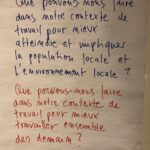
  • How can we work well with each other?
  • How can we learn more about other people’s specific needs?
  • How can we make good use of the insights we have gained?
  • How can we develop new ideas together?
  • How can we make an idea tangible?
  • How can we test our idea before we put it into action?

TAGS

#collaboration
#design thinking
#participation
#create space
#discuss

What can gachieve ?

The g3 method proposes a specific and immediate way to approach accessibility and participation. It is:

  • Free of charge because it does not require any form of professional moderation.
  • Ideal for encouraging groups of different types of people in heterogeneous groups of any size to participate.
  • Low threshold and simple to use, so it is easy to get started straight away without any introduction or special training.
  • Efficient because each workshop produces concrete results in just one hour.
  • Needs-orientated and can be used as a whole and individually in a wide range of combinations.
  • Practical as it focuses on key topics such as needs analyses, idea development and the designing and testing of prototypes.

Who is  aimed at?

The g3 method is offered to anyone who is involved with cultural institutions or projects, and people who would like to find concrete answers to concrete questions.

The process guidelines are also ideal for other topic areas such as politics, administration and civil society.

It is important that the g3 method should never be understood as a finished product. It should instead be seen as a way of giving people the opportunity to work constructively and collaboratively.

Why is the gmethod needed?

Complex challenges within culture and politics can no longer be satisfactorily managed by individuals or interest groups. The wide spectrum of needs is not only continually growing, but traditional forms of decision making are also increasingly being challenged.

Ways of reaching and involving the whole population more intensively and effectively in discussions relating to content are being discussed in depth in the arts and culture sector. Teams set up in a wide variety of ways are more creative, more effective and can therefore work more successfully.

About us

KIWit-Programme «Kultur+Wirtschaft»
Project lead: Moritz von Rappard, Co-development: Hanna Voss, Collaboration: Stefanie Neumeister

This work is licensed under a creative commons designation – non-commercial – under the same conditions as the 4.0 international licence.

Inclusion

The method is not completely inclusive yet because a lack of language skills and physical and mental disabilities make full participation more difficult. However, in the best-case scenario, each application in practice may open up further ideas or perspectives, which is why we especially welcome feedback.

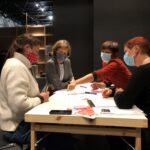
A look back at the g3 workshop m2act@legrütli

m2act@LeGrütli
m2act@LeGrütli
m2act@LeGrütli
m2act@LeGrütli