Tatenbank

The Swiss-wide central action platform for a more sustainable cultural sphere

The Tatenbank is a project by Vert le Futur, the association for sustainable culture and events.  The platform gathers knowledge from the cultural sector on sustainably producing and organising cultural events. The content of the Tatenbank is researched and curated by an interdisciplinary team of people at the intersection of culture and sustainability, with creative artists, authors, software developers, communication specialists, graphic designers and networking artists continuously building up and further developing it.

What is the Tatenbank made up of?

The Tatenbank offers condensed knowledge checked by experts, specific aids and tools and inspiring examples of sustainable work in all areas of cultural creation:

  • Administration
  • Equipment
  • Purchasing
  • Gastronomy
  • Infrastructure
  • Communication
  • Curation
  • Artistic content

Tags

#tatenbank
#vertlefutur
#tools
#inspiration
#ideas
#examples
#sustainableculture

What does the Tatenbank offer?

  • Information: The Tatenbank is a source of knowledge, inspiration and orientation.
  • Community: Creative artists can use the Tatenbank to obtain low-threshold access to expertise and a network of experts. They can learn how to go about their activities in a resource-conserving, sustainable way.
  • Participation: Users can get involved and share their own «deeds» in the area of sustainable cultural creation. The Tatenbank is therefore continuously updated with experiences from the community.

Why is the Tatenbank important?

To ensure that sustainability does not get swept under the table in the world of culture, it is important to have useful aids, knowledge and in particular good examples at our disposal.

It takes time to collect and study this information, and to draw the right conclusions from it.

The Vert le Futur association aims to close this gap with the Tatenbank.

Who is the Tatenbank aimed at?

The Tatenbank is aimed at creative artists from all genres who want to work towards sustainable culture in their respective areas of work and impact.

All content is available in German and French.

Impressum

Vert le Futur
vertlefutur.ch

Contact details
tatenbank@vertlefutur.ch

Values of Solidarity

A mediation game for team-building and cultural co-creation

«Values of Solidarity» is a workshop tool that is both a game and a mediation tool for teams that are just beginning their collaboration. Using cards, participants can describe which values are important to them and learn which values drive their partners. This enables members of a project or work group to get to know one another better and share values, experiences and needs that would perhaps otherwise not be shared. The discussions that arise during the game promote collaborative communication and create a framework for supporting and lasting collaboration that reflects the participants’ cultural, intellectual and emotional diversity.

What does this tool offer?

«Values of Solidarity» is a set of cards in English. The game contains two types of cards:

«Value» cards contain descriptions of values that may be important for creating a framework of solidarity and collaboration:

  • Honesty
  • Motivation
  • Respect
  • Health
  • etc.

«Conflict» cards contain fictional scenarios to be overcome in which poor communication and cultural differences lead to tension and conflict.

Tags

#community
#care
#values
#solidarity
#collaboration
#fairpractice
#nonviolentcommunication
#reshapenetwork
#valuesofsolidarity

Why is this set of cards important?

Conflicts may arise in work groups and collaborative relationships when members have very different values or some people do not recognise others’ rights.

During the game, teams are presented with fictional conflict situations and team members have the chance to formulate their own values.

The aim is for each team to formulate their own value frameworks. This promotes solidarity within the group.

Who is this tool aimed at?

The tool has been developed especially for teams that are just beginning their collaboration. In particular, it is aimed at project teams working in the areas of art and culture, but is also relevant for other sectors.

What can be achieved with this set of cards?

«Values of Solidarity» offers inspiration and the opportunity to reflect on how a team wants to overcome possible conflicts.

The game places participants in conflict situations together. This enables them to identify the often hidden and obscure mechanisms causing tension and difficulties. At the same time, participants can identify the methods needed to relieve tensions, especially when different backgrounds merge.

This game has the potential to raise awareness of solidarity and the practical and operational framework it offers for collaboration.

Download

More information can be found on the Reshape Network website:

The Gamified Workshop Toolkit: Values of Solidarity

Download extract

Ordering a set of cards

The set of cards can be ordered from RESO – Dance Network Switzerland for CHF 15 plus delivery costs.

Send an email to RESO if interested: info@reso.ch

Impressum

2020, RESHAPE Network

reshape.network

Created by Anikó Rácz, Doreen Toutikian and Dorota Ogrodzka in consultation with Konrad Gadzina.

Developed as part of RESHAPE project «Solidarische Ökonomien» («Solidarity-based economies»), involving Ouafa Belgacem, Ekmel Ertan, Harald Geisler, Anastasya Kizilova, Dorota Ogrodzka, Anikó Rácz, Laure de Selys and Doreen Toutikian under the management of Nike Jonah.

The new edition of «Values of Solidarity» in 2022 was financed by Reso – Dance Network Switzerland and m2act, the funding and network project of the Migros Culture Percentage.

Green Guide for cultural organisations

reflector supports cultural organisations and creative artists in reducing their ecological footprint and shaping a forward-looking, vibrant cultural scene.

With the Green Guide for cultural organisations , reflector provides instructions for the rapid implementation of ecological measures.

reflector is supported by m2act, Migros Culture Percentage’s funding and networking project for the performing arts, in collaboration with the Migros Pioneer Fund.

What does this tool offer?

The Green Guide consists of several sets of thematic guidelines with specific measures designed to facilitate action that can be implemented swiftly. All of the guidelines can be used independently from the others and in any order.

Tags

#reflector
#greenguide
#howto
#sustainability
#sustainabletheatre
#greenculture

What does this tool do?

The Green Guide provides suggestions for effective and sensible measures in the following areas:

  • Mobility
  • Production
  • Technology
  • Food
  • Energy
  • Communication

Within each guideline there are several suggested measures that can be selected individually. This results in a customised action plan that can be downloaded as a PDF.

Why is this tool important?

Integrating sustainability into day-to-day operations is not always easy. The Green Guide makes it easier to get started, helps to set goals and implement the appropriate measures.

Who is this tool aimed at?

The Green Guide accompanies cultural institutions and creative artists on the way to sustainable practices. The guidelines were developed together with cultural organisations and sustainability experts.

Impressum

Contact

hello@reflector.eco
reflector.eco
Instagram
LinkedIn

Impact Guide

Der Impact Guide ist eine Schritt-für-Schritt Anleitung, die Projektteams dabei unterstützt, ihr Projekt möglichst wirkungsvoll aufzusetzen.

Er hilft Akteur*innen, die in den Darstellenden Künsten zu einem Strukturwandel beitragen wollen, ihre Annahmen zu überprüfen und herauszufinden, ob die geplanten Aktivitäten und Angebote bei der Zielgruppe tatsächlich die gewünschte Verhaltensänderung bewirken.

Der Impact Guide basiert auf der Theory of Change und wurde vom Migros-Pionierfonds gemeinsam mit Policy Analytics entwickelt.

Warum braucht es dieses Tool?

Projekte, die einen gesellschaftlichen Wandel anstreben, bieten Aktivitäten an, die beim Zielpublikum eine Verhaltensänderung auslösen sollen, die ohne das Projektangebot nicht stattfinden würde. Die Wirkung des Projekts misst sich an dieser Verhaltensänderung.

Für die wirkungsvolle Konzipierung eines Projekts hilft es, das Projekt von hinten aufzurollen und seine Wirkungskette genauer zu kennen.

Dafür stellt der Impact Guide folgende Fragen:

  • Welche systemische Veränderung streben wir an?
  • Wer muss sein Verhalten wie ändern, um dieser systemischen Veränderung näher zu kommen?
  • Welches Angebot kann unser Projekt machen, um zu dieser Verhaltensänderung beizutragen?
  • Welche Annahmen stecken hinter dem Zusammenhang zwischen Angebot und Verhaltensänderung – und sind diese plausibel?

Tags

#impact
#wirkungsorientierung
#theory of change
#systemische veränderung
#input output outcome
#wirkungskette

Für wen ist dieses Tool?

Der Impact Guide ist ein Angebot für alle Akteur*innen, die mit ihren Ideen, Aktivitäten und Projekten eine fairere, inklusivere und nachhaltigere Kultur und Gesellschaft gestalten wollen.

Was kann dieses Tool?

Ein Projektteam kann mit Hilfe des Impact Guide Schritt für Schritt seine eigene Wirkungslogik aufzeichnen, seine Annahmen prüfen und die Aktivitäten so ausrichten, dass sie tatsächlich zum Erreichen der Wirkungsziele beitragen.

Er hilft dabei

  • Wirkungsziele zu definieren
  • Zusammenhänge zu visualisieren
  • Wirkungsketten zu erkennen
  • Annahmen zu überprüfen
  • Angebote zu schärfen

Impressum

Autor*innen: Linda Sulzer, Aljosha Henkel, Andreas Beerli

Migros Pionierfonds / Direktion Kultur und Soziales des Migros-Genossenschafts-Bundes

Policy Analytics


Stand: November 2021

«Alle inklusive – ein Kleintheater will mehr»

This documentary takes you on the journey of Kleintheater Luzern towards a more inclusive cultural offering. Not only did Kleintheater Luzern record the inclusive programme that took place at their venue and how they implemented it, but they also took the 23/24 season as an opportunity to ask other cultural institutions, cultural funding bodies and politicians about inclusion in the cultural sector and the performing arts.

What does the tool consist of?

This tool consists of a 60-minute documentary film. The film is available with subtitles in DE/FR, as well as with subtitles for the hearing impaired in DE/FR and an audio description audio track.


Tags

#inclusion
#performingarts
#theatre
#cabaret#disability
#kleintheaterluzern
#barriers


What can this tool do?

This film provides a brief factual insight into the development, opportunities and future challenges of inclusion in the field of culture.

The film gives a voice to a wide variety of stakeholders, listens and puts into context where the topic of inclusion currently stands in the Swiss cultural scene.

The complete film can be requested from Kleintheater Luzern for a small licence fee.


Who is this tool aimed at?

For all those who (would like to) deal with the topic of inclusion in the cultural sector and the performing arts.


Why is this tool needed?

The topic of inclusion in the cultural sector is broken down in a vivid and entertaining way and made accessible through the chosen medium of film.

Impressum

Ownership: Fabienne Mathis on behalf of Kleintheater Luzern

The tool may be published under the following CC licence:

This work is licensed under a Creative Commons Attribution – Non-Commercial – Share alike 4.0 International Licence.

Contact: fabiennemathis@
kleintheater.ch
Website


Supporting Relevance

Ideas and strategies for inclusive, fair and flexible arts funding 

IETM – The international network for contemporary performing arts is one of the oldest and largest international cultural networks, representing the voice of over 500 organisations and individual professionals working in the contemporary performing arts worldwide. 

The network is actively working towards the achievement of better working conditions in the arts. Securing arts funding is a key element of this urgent and complex process. IETM campaigns intensively for new forms of arts funding. The publication «Supporting Relevance: Ideas and strategies for inclusive, fair and flexible arts funding» wants to encourage debate and offers strategies and solutions for sustainably improving the situation in the arts sector and the conditions for the professionals involved. 

What does this tool offer? 

In this publication, IETM provides: 

  • Key terms  
  • Inspiring examples 
  • Arguments 
  • Recommendations 

All of these are aimed at promoting fair, flexible and inclusive funding in the performing arts. 

Tags

#fairfunding
#inclusivefunding
#flexiblefunding
#sustainableart
#fairpractices 

Why is this tool important? 

The aim is for the arts sector to thrive and remain relevant in line with its values and current developments in society. Rethinking, adapting and improving models, methods and instruments related to arts funding is therefore essential. 

What does this tool do? 

The publication answers the following questions: 

  • Fairness: What is the key to fair funding in the performing arts?  
  • Flexibility: What does flexible funding mean? 
  • Inclusion: Who is excluded and how does inclusion work? 

The publication makes an important contribution to the current discussions surrounding the future of the performing arts and the role of arts funding in this sector. 

Who is this tool aimed at? 

The publication is aimed at all stakeholders looking to contribute ideas, activities and projects that will help shape a fairer, more inclusive and more sustainable culture and society, particularly at members of funding institutions and selection committees.

Download PDF

IETM Publication 2021 – Supporting Relevance

The publication is also available as an audio document on the IETM’s website: www.ietm.org  

Impressum

M. Ilic, F. Farhat, «Supporting relevance: Ideas and strategies for inclusive, fair and flexible arts funding», IETM, November 2021.

www.ietm.org/en/resources

g3 method

(shaping society together!)

Inspired by design thinking, this innovation method enables cultural practitioners to develop concrete and practical solutions to current challenges (such as participation and fair working conditions) in the performing arts. Six concrete guidelines have been developed:

Six guidelines

  • How can we work well with each other?
  • How can we learn more about other people’s specific needs?
  • How can we make good use of the insights we have gained?
  • How can we develop new ideas together?
  • How can we make an idea tangible?
  • How can we test our idea before we put it into action?

TAGS

#collaboration
#design thinking
#participation
#create space
#discuss

What can gachieve ?

The g3 method proposes a specific and immediate way to approach accessibility and participation. It is:

  • Free of charge because it does not require any form of professional moderation.
  • Ideal for encouraging groups of different types of people in heterogeneous groups of any size to participate.
  • Low threshold and simple to use, so it is easy to get started straight away without any introduction or special training.
  • Efficient because each workshop produces concrete results in just one hour.
  • Needs-orientated and can be used as a whole and individually in a wide range of combinations.
  • Practical as it focuses on key topics such as needs analyses, idea development and the designing and testing of prototypes.

Who is  aimed at?

The g3 method is offered to anyone who is involved with cultural institutions or projects, and people who would like to find concrete answers to concrete questions.

The process guidelines are also ideal for other topic areas such as politics, administration and civil society.

It is important that the g3 method should never be understood as a finished product. It should instead be seen as a way of giving people the opportunity to work constructively and collaboratively.

Why is the gmethod needed?

Complex challenges within culture and politics can no longer be satisfactorily managed by individuals or interest groups. The wide spectrum of needs is not only continually growing, but traditional forms of decision making are also increasingly being challenged.

Ways of reaching and involving the whole population more intensively and effectively in discussions relating to content are being discussed in depth in the arts and culture sector. Teams set up in a wide variety of ways are more creative, more effective and can therefore work more successfully.

About us

KIWit-Programme «Kultur+Wirtschaft»
Project lead: Moritz von Rappard, Co-development: Hanna Voss, Collaboration: Stefanie Neumeister

This work is licensed under a creative commons designation – non-commercial – under the same conditions as the 4.0 international licence.

Inclusion

The method is not completely inclusive yet because a lack of language skills and physical and mental disabilities make full participation more difficult. However, in the best-case scenario, each application in practice may open up further ideas or perspectives, which is why we especially welcome feedback.

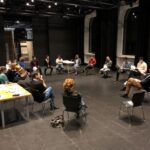
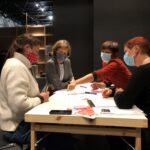
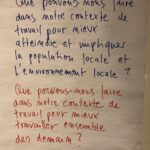
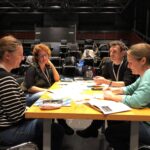
A look back at the g3 workshop m2act@legrütli

m2act@LeGrütli
m2act@LeGrütli
m2act@LeGrütli
m2act@LeGrütli

Cooperation in the performing arts sector

glossary

Misunderstandings often occur during cooperation between theatres, festivals and companies when it comes to defining and negotiating partner roles and services. The term “coproduction” in particular is now used for all types of cooperation. This increasingly devalues this important form of cooperation and the services associated with it. 

CORODIS (Commission romande de diffusion des spectacles) therefore set up a working group, in which RESO (Dance Network Switzerland) and the Migros Cultural Percentage / m2act was involved, in 2018. The glossary and definitions that resulted from this working group were approved by members of CORODIS (the cantons and the majority of the cities of French-speaking Switzerland) and FRAS (Fédération romande des arts de la scène) in 2019 and translated into German by RESO in 2021.

Why do we need this glossary?

m2act shares the belief that applying this glossary consistently across Switzerland will play a significant role in clarifying and improving cooperation in the performing arts sector, and actively helps to disseminate it through the whole of Switzerland.

Tags

#coproduction
#contracts
#cooperation
#transparency
#fairpractice

Who is this glossary aimed at?

The glossary is directed at theatres, festivals and companies alike. It can be used as a basis for discussions during negotiations concerning cooperation and coproduction.

What does this glossary offer?

This glossary clarifies the following questions:

  • What is coproduction and what is it not?
  • Which partners enter into a coproduction agreement?
  • Which services does coproduction involve?

It helps

  • to clearly define services
  • to promote commitment
  • to eliminate misunderstandings
  • to improve cooperation
  • to enhance understanding of different terms, structures and cooperation cultures between the French- and German-speaking parts of Switzerland

The German version can be found below. A translation into English does not yet exist.

1. Kooperierende Strukturen


PRODUKTIONSSTRUKTUR: Juristische Person (meist eine Compagnie oder ein Theater), welche eigenverantwortlich Tanz- oder Theaterproduktionen realisiert. Sie besitzt die Rechte an der Produktion, ist zuständig für deren Finanzierung und übernimmt die Verantwortung als Arbeit- und Auftraggeberin für die Mitarbeitenden. Sie koordiniert die notwendigen personellen und materiellen Ressourcen und muss dabei stets zwischen den ökonomischen und künstlerischen Bedingungen abwägen, damit das Projekt umgesetzt werden kann. Sie übernimmt meist auch die Koordination der Auswertung der Produktion (Aufführungen, Diffusion) und kümmert sich um die Löhne, Honorare und sonstige Entschädigungen an die Mitarbeitenden sowie um die Aufbewahrung und Instandhaltung der Kostüme, des Bühnenbilds und der Requisiten.


ORGANISATIONSSTRUKTUR: Juristische Person (meist ein Theater oder ein Festival), welche eine Tanz- oder Theaterproduktion einlädt, um diese vor einem Publikum aufzuführen. Sie übernimmt sämtliche Kosten für die Durchführung der Aufführungen und bietet dafür einen geeigneten Ort, die notwendige Infrastruktur und Technik. Darüber hinaus ist sie für Urheberrechtsabgaben verantwortlich und stellt das notwendige eigene Personal für die technischen Betreuung (Auf- und Abbau, Ton, Licht etc.), für die Sicherheit und Betreuung des Publikums, den Ticketverkauf sowie für die Kommunikation und Bewerbung der Aufführungen.


BEAUFTRAGTE PRODUKTIONSSTRUKTUR: Produktionsstruktur, die von einer oder mehreren Organisationsstrukturen (meist Theater oder Festivals) im Rahmen einer Koproduktion (vgl. «Koproduktion») beauftragt wird, in deren Namen eine Tanz- oder Theaterproduktion zu realisieren. Sie übernimmt die Organisation der Produktion sowie die rechtliche und finanzielle Verantwortung im Rahmen der Vereinbarung mit den anderen an der Koproduktion beteiligten Strukturen.

2. Formen der Kooperation


KOPRODUKTION: Eine Koproduktion wird zwischen einer Produktionsstruktur und einer oder mehrerer Organisationsstrukturen vereinbart, die finanzielle, technische und personelle Ressourcen zusammenlegen, um gemeinsam ein Stück zu produzieren. Die finanziellen Leistungen der an der Koproduktion beteiligten Organisationsstrukturen müssen höher sein, als der Verkaufspreis der Aufführungen, so dass damit ein Teil der Produktionskosten gedeckt werden kann. Zum finanziellen Koproduktionsbeitrag können weitere personelle oder Sachleistungen hinzukommen. Für die Koproduktion und die Aufführungen sind zwei separate Verträge abzuschliessen.


PREACHAT: Als «Préachat» (Vorkauf) bezeichnet man den Kauf von einer oder mehrerer Aufführungen, bevor die Tanz- oder Theaterproduktion produziert wurde. Für die Organisationsstruktur stellt der Préachat ein künstlerisches und finanzielles Risiko dar und sollte daher als Vertrauensvorschuss gegenüber der Produktionsstruktur wertgeschätzt werden. Die Bezeichnung der Organisationsstruktur als «Partner», z.B. in allen Kommunikationsmitteln, ist daher angemessen (vgl. «Partnerschaft»).


PARTNERSCHAFT: Als «Partner» wird eine Organisationsstruktur bezeichnet, die eine Produktionsstruktur aktiv bei der Recherche, Produktion oder Diffusion unterstützt. Die damit verbundenen Leistungen können vielfältig sein: technische oder dramaturgische Begleitung, Bereitstellung von Proberäumlichkeiten, Unterstützung beim Fundraising, Kommunikation und Medienarbeit, bei der Diffusion und Vernetzung etc. Privilegierte Formen der Partnerschaft stellen insbesondere «Préachat» und «Residenz» dar.


RESIDENZ: Im Rahmen einer Residenz stellt eine Organisationsstruktur einer Produktionsstruktur während einem sinnvollen Zeitraum kostenlos einen geeigneten Arbeitsraum sowie Unterkünfte und Verpflegung, insbesondere für auswärtige Gäste, zur Verfügung. Zusätzlich können Probezeit auf der Bühne, technische und/oder dramaturgische Unterstützung gewährt werden.


ARTIST/S IN RESIDENCE | ASSOCIATED ARTIST/S: Kunstschaffende oder Compagnie, die von einer Organisationsstruktur dazu eingeladen werden, während eines bestimmten Zeitraums aktiv am Leben des Theaters oder Festivals teilzunehmen und dieses mitzugestalten. Während sie die Organisationsstruktur konzeptuell, künstlerisch und/oder durch ihre regelmässige Präsenz bereichern, unterstützt diese sie in ihrer künstlerischen Entwicklung und steht als Koproduzentin von Neuproduktionen fest. Der/die Kunstschaffende oder Compagnie kann z.B. bei Teamsitzungen, bei der Programmgestaltung oder Vermittlung eingebunden werden.

3. Finanzielle Leistungen


VERKAUFSPREIS (für eine oder mehrere Aufführungen; frz. «PRIX DE CESSION»): Der Verkaufspreis muss mindestens sämtliche Kosten decken, die seitens der Produktionsstruktur anfallen, um die Aufführungen durchführen zu können. Er wird durch die Produktionsstruktur festgelegt und kann eine mehr oder weniger hohe Gewinnspanne enthalten, welche die gesamte oder teilweise Rückfinanzierung von Wiederaufnahme-, Betriebs- oder Produktionskosten erlaubt.


KAUFVERTRAG (für eine oder mehrere Aufführungen; frz. «CONTRAT DE CESSION»): Vertrag zwischen einer Organisationsstruktur (Käufer) und einer Produktionsstruktur (Verkäufer), welche die Leistungen der beiden Partner regelt: Zusätzlich zum Verkaufspreis übernimmt der Käufer in der Regel Reise-, Transportkosten, Per Diems, Unterbringungskosten sowie die Abgeltung von Urheberrechten. Ausserdem regelt der Kaufvertrag die notwendigen technischen Rahmenbedingungen (Technical Rider).


GAGE: Die Gage ist der gebräuchliche Begriff für die Entlohnung des an einer Tanz- oder Theaterproduktion resp. ihrer Aufführungen beteiligten Personals. In der Schweiz hat dieser Begriff keine gesetzliche Grundlage: Es handelt sich entweder um Löhne (inkl. Sozialabgaben) oder um Honorare für Mitarbeitende, die selbstständig erwerbstätig sind. Dieser Begriff wird im Rahmen von Verhandlungen häufig mit dem «Verkaufspreis» für eine oder mehrere Aufführungen verwechselt, der jedoch noch weitere notwendige Kosten seitens der Produktionsstruktur beinhaltet (vgl. «Verkaufspreis»).


«COÛT PLATEAU»: Im Deutschen wird dieser Begriff nicht verwendet. Im Französischen bezeichnet er ausschliesslich die Kosten, die mit der Aufführung auf der Bühne verbunden sind, d.h. die Summe der Aufführungsgagen der Künstlerinnen und Techniker sowie ggf. die Kosten für Verbrauchsmaterial. Nicht enthalten sind jedoch die Kosten für die Produktion und Diffusion, Wiederaufnahmekosten oder Transport- und Reisekosten etc.